VR safety training with scored competency assessment and a dated digital certificate, deployable on standalone headsets across every site, in Hindi and English.
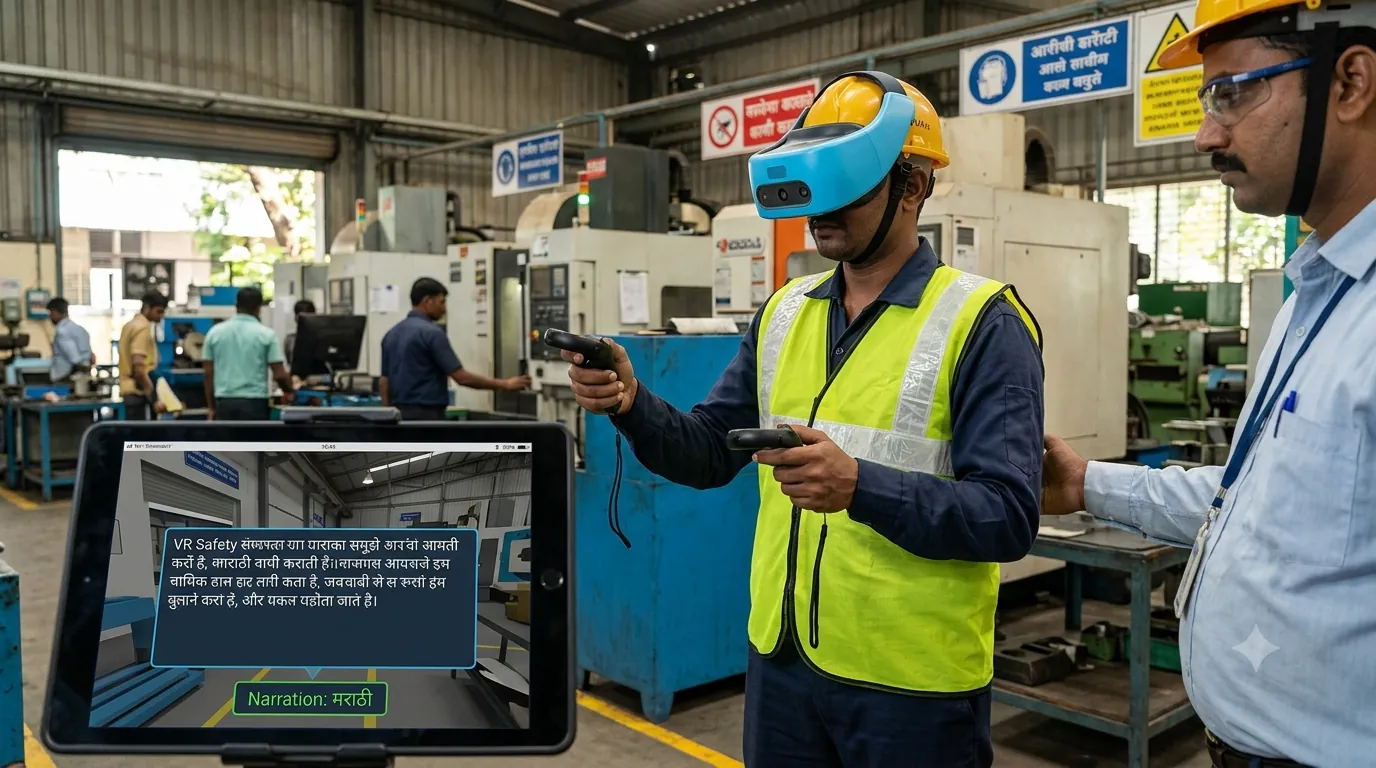
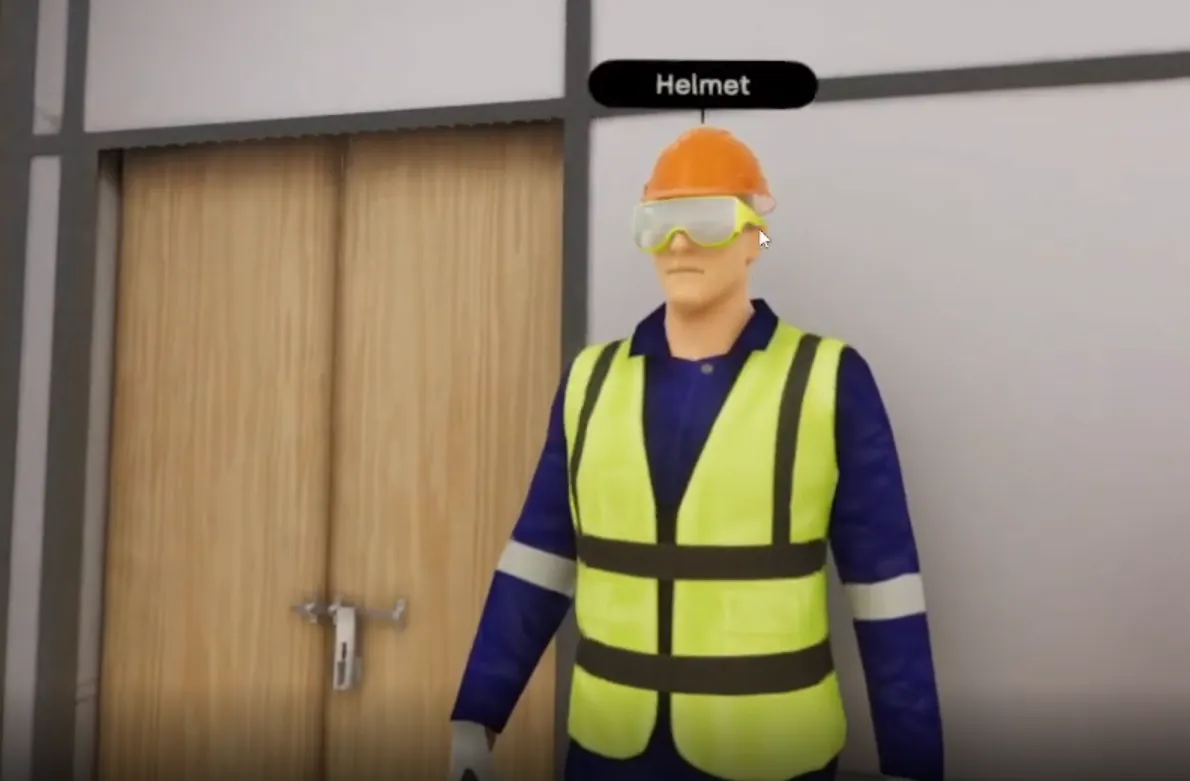
An employer must assess the workplace for hazards, provide the correct personal protective equipment where those hazards cannot be engineered out, and train every employee who uses PPE to know when it is needed, which PPE to use, how to put it on and take it off, its limitations, and how to maintain and dispose of it. Under OSHA 29 CFR 1910 Subpart I the employer, not the worker, is responsible for the hazard assessment and for verifying training by written certification. ISO 45001 places PPE at the bottom of the control hierarchy, so training must also teach that PPE is the last line of defence, not the first. EDIIIE’s PPE & Site Induction module trains all of this in VR: the trainee performs a hazard walk of their actual site, selects head, eye, respiratory, hand, foot and body protection to match each zone, and practises correct donning and doffing sequences, all scored, all certified.
This module is designed around ISO 45001 / OSHA 29 CFR 1910 Subpart I and delivered as an immersive VR simulation with three progressive modes, Learn, Practice and Assessment, with progression gated on competency. Every trainee finishes with a scored result and a dated digital certificate recorded in the LMS.
Screens from the PPE & Induction module. Every scenario is rebuilt from real plant conditions so the hazard, the equipment and the procedure match what the worker meets on shift.


Large industrial sites induct thousands of workers, contractors and visitors a year, and the induction is where PPE discipline is set. Done as a classroom session it is slow, inconsistent between trainers, and quickly forgotten. In VR, induction becomes a standardised experience every person completes identically: the same hazard walk, the same PPE selection test, the same scored assessment, whether they are inducted in Jaipur or on a remote site, in Hindi or English. One trainer oversees a room of headsets, and the LMS holds a dated, per-person competency record that an auditor or a contractor-management system can read directly. This is a named EDIIIE capability delivered at SAIL Bhilai, where PPE was one of six modules given to more than 5,000 workers.
For most PPE, wearing it is intuitive. For respiratory protection and chemical suits it is not, the order of removal determines whether a worker contaminates themselves taking the equipment off. Posters and videos show the sequence; they cannot check whether a worker follows it. VR can. The trainee performs the doffing sequence step by step, and the assessment flags the exact point where contamination would occur. Combined with the Chemical Safety and Confined Space modules, this builds the respiratory-protection competency that high-hazard sites are most often cited for.
Naming the standard is what separates a vendor page from a blog post, for a buyer and for an answer engine alike. Each element of the module is mapped to the requirement it satisfies.
| Standard | What it requires |
|---|---|
| ISO 45001 | Occupational health & safety management system, hazard identification and control hierarchy, with PPE as the final control. |
| OSHA 29 CFR 1910 Subpart I | Employer must assess the workplace for hazards, provide appropriate PPE, and train each employee who is required to use it. |
| Factories Act 1948 | Statutory duty in India to provide and maintain protective equipment for hazardous processes. |
One module, three gated modes, the trainee cannot reach assessment until they have demonstrated the procedure in practice.
A guided walkthrough of the procedure and the standard behind it, at the trainee's own pace, with the hazard shown safely at full realism.
The trainee performs the procedure themselves in an interactive scenario, repeating until the sequence is correct. Wrong choices show their consequence safely.
A scored assessment against the standard. On a pass, the LMS issues a dated digital certificate and logs completion, competency score and error-per-step for audit.
At SAIL Bhilai, one of India’s largest integrated steel plants, EDIIIE deployed a six-module VR safety programme to more than 5,000 workers, covering blast furnace, coke oven, rolling mill, fire response, electrical lockout and PPE. The programme standardised safety induction across shifts and sites without taking a single worker into a live hazard area to train.

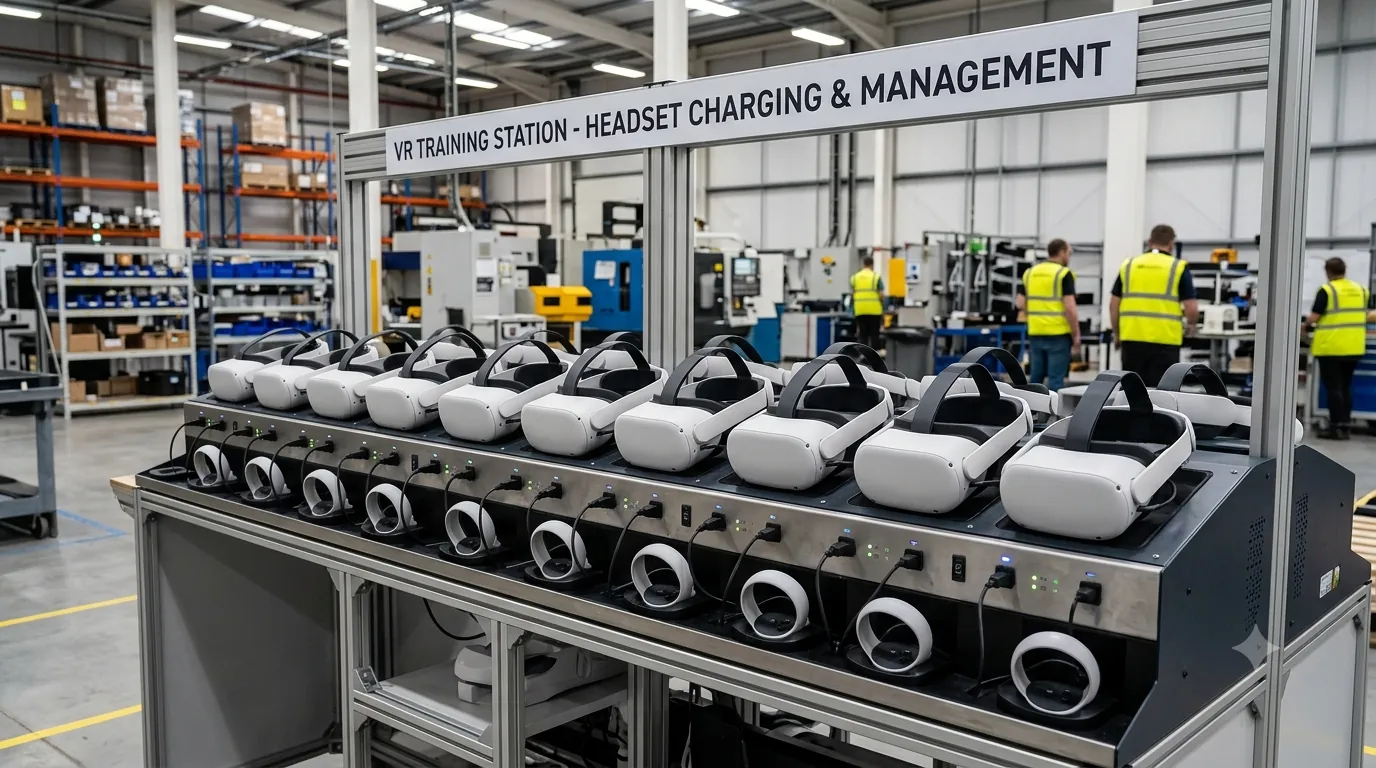
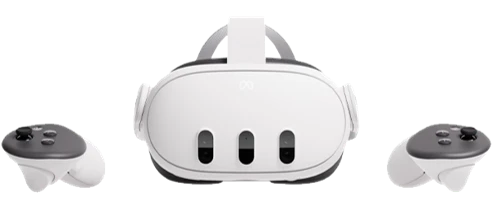
The same module ships to every site on a fleet of Meta Quest headsets with a charging station and a companion tablet for the instructor.

A rack of headsets lives at the plant. Trainees pick one up, complete the module and hand it back; scores sync to the LMS when the headset reaches Wi-Fi. No dedicated PC per seat and no simulator room to build.

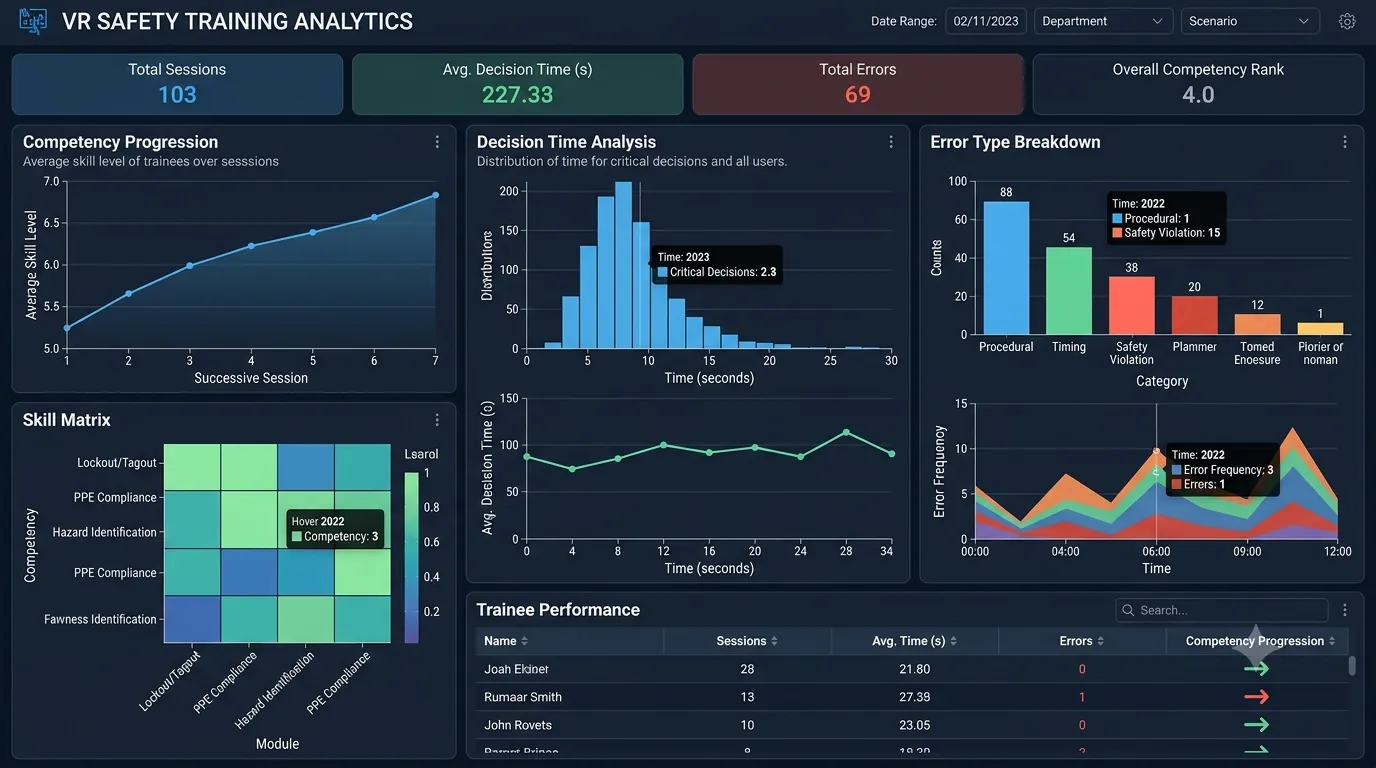
Assessment mode records decision time, procedural errors and safety violations per step. The safety officer sees competency progression per trainee and per department, and the LMS issues a dated digital certificate on a pass.

Every module is built and tested for standalone Quest hardware. Headsets and the charging station can be supplied with the programme, or the module is deployed onto a fleet you already own.
This module is deployed across EDIIIE's industry programmes. Explore how it fits each sector:
Book a demo and see the PPE & Induction module running on a headset, scored against ISO 45001 / OSHA 29 CFR 1910 Subpart I.
Request this module