VR safety training with scored competency assessment and a dated digital certificate, deployable on standalone headsets across every site, in Hindi and English.
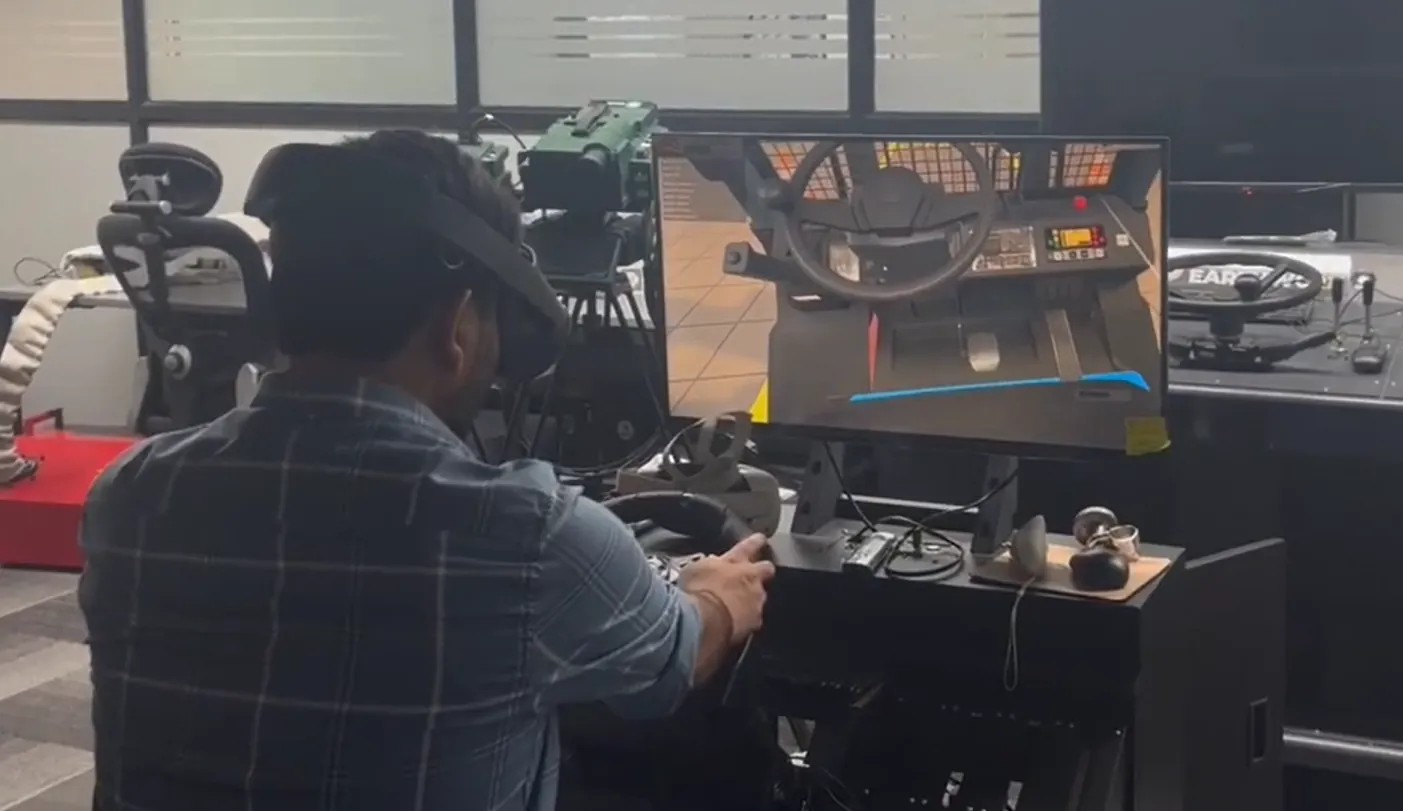
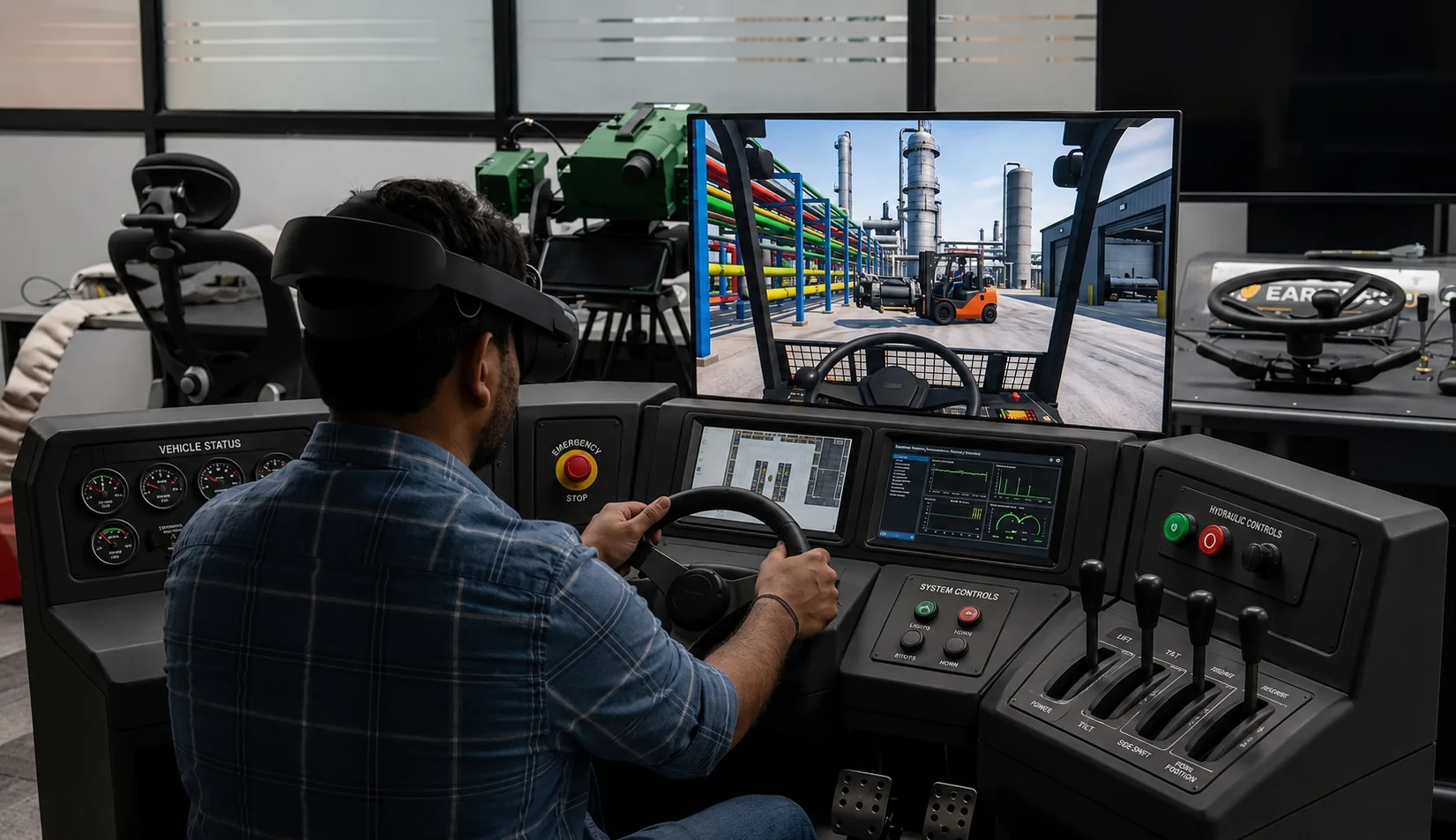
Forklift, or powered-industrial-truck, operators must be trained and evaluated before they operate a truck, and OSHA 29 CFR 1910.178 requires the employer to certify each operator and re-evaluate them at least every three years, or sooner after an accident, near-miss or a change of equipment. Training must combine formal instruction, practical demonstration and a workplace evaluation. EDIIIE’s module delivers the instruction and practical judgement layer in VR: the trainee performs a pre-use inspection, operates a truck around a live site with pedestrians and blind corners, observes load-capacity and stability limits, and handles the pedestrian-interaction scenarios that cause most serious forklift incidents. The same module also covers manual handling, posture, load limits, team lifts and mechanical aids, to control the musculoskeletal injuries that dominate handling-injury statistics. Every attempt is scored and certified, ready for the employer’s workplace evaluation to complete.
This module is designed around OSHA 29 CFR 1910.178 / IS 4660 / Ergonomics and delivered as an immersive VR simulation with three progressive modes, Learn, Practice and Assessment, with progression gated on competency. Every trainee finishes with a scored result and a dated digital certificate recorded in the LMS.
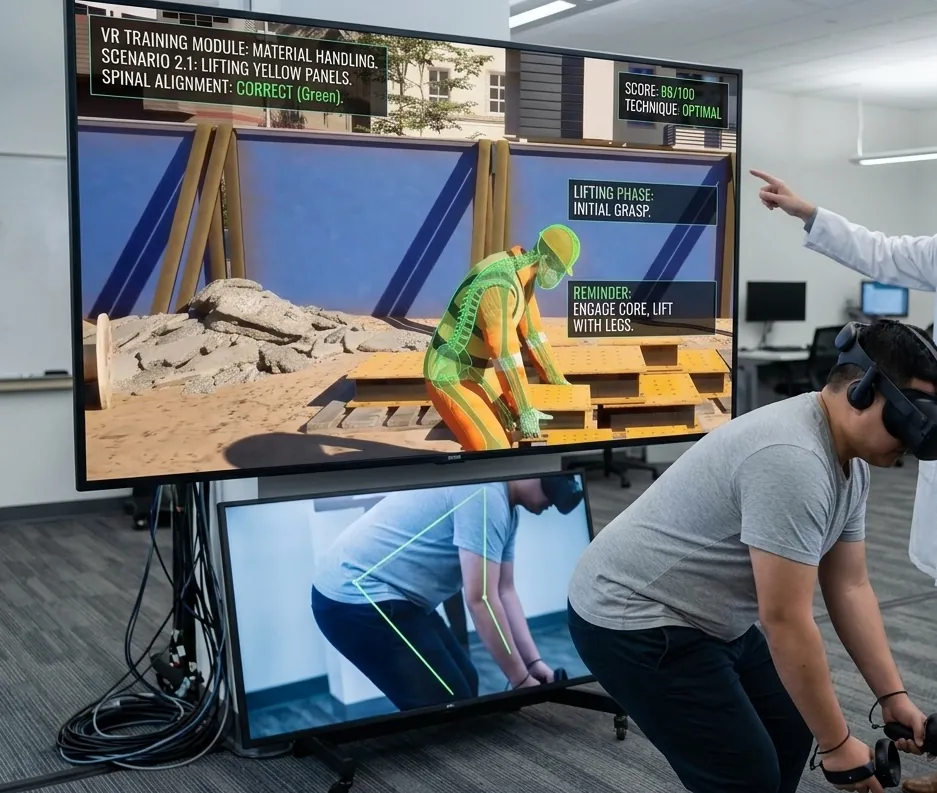
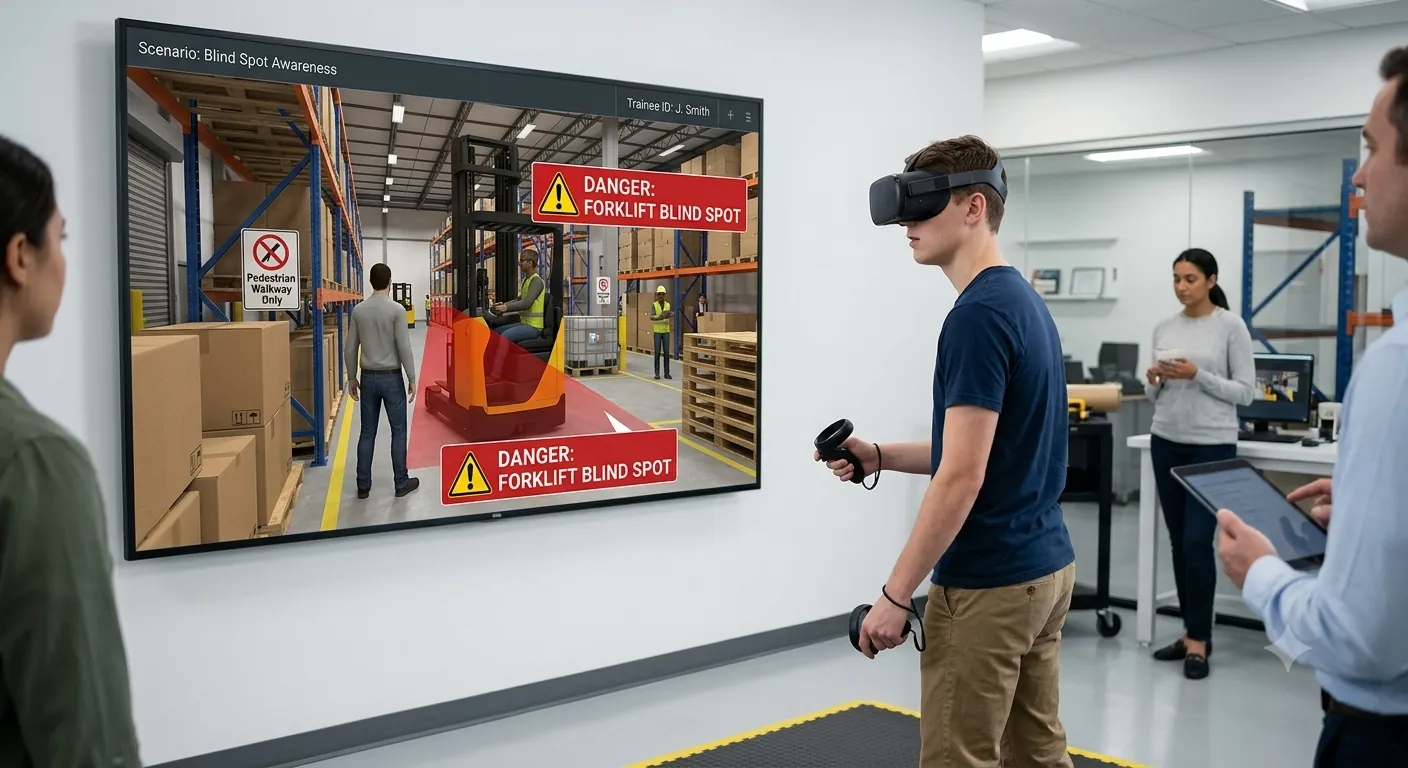
Screens from the Forklift & Handling module. Every scenario is rebuilt from real plant conditions so the hazard, the equipment and the procedure match what the worker meets on shift.


OSHA certification for forklift operators has three parts: formal instruction, practical training, and an evaluation in the actual workplace. VR is strongest on the first two. It lets a trainee build vehicle judgement, stability, load handling, pedestrian awareness, without tying up a real truck, a real load and a real aisle, and without the risk of a learner operating near people. It also lets a site rehearse the specific dangerous scenarios (a pedestrian stepping from behind racking, an overloaded mast) that you cannot stage safely with a real forklift. The employer’s in-workplace evaluation still completes the certification; VR gets the operator to that evaluation faster and safer, and the scored record shows exactly which skills are ready.
Powered trucks get the attention, but manual material handling produces the largest volume of lost-time injuries in most warehouses and plants, slow, cumulative musculoskeletal damage from poor lifting technique and repetitive strain. The module trains correct posture, load assessment, when to use a mechanical aid, and how to coordinate a team lift, then scores the trainee’s technique. Combined with the Slip, Trip & Fall and PPE modules it forms the general-handling safety layer of a warehouse or manufacturing induction.
Naming the standard is what separates a vendor page from a blog post, for a buyer and for an answer engine alike. Each element of the module is mapped to the requirement it satisfies.
| Standard | What it requires |
|---|---|
| OSHA 29 CFR 1910.178 | Powered industrial trucks, operator training, evaluation and certification, refreshed at least every three years. |
| IS 4660 | Indian code of practice for material handling equipment and safe operation. |
| ISO 45001 / manual-handling ergonomics | Control of musculoskeletal-disorder risk from manual handling. |
One module, three gated modes, the trainee cannot reach assessment until they have demonstrated the procedure in practice.
A guided walkthrough of the procedure and the standard behind it, at the trainee's own pace, with the hazard shown safely at full realism.
The trainee performs the procedure themselves in an interactive scenario, repeating until the sequence is correct. Wrong choices show their consequence safely.
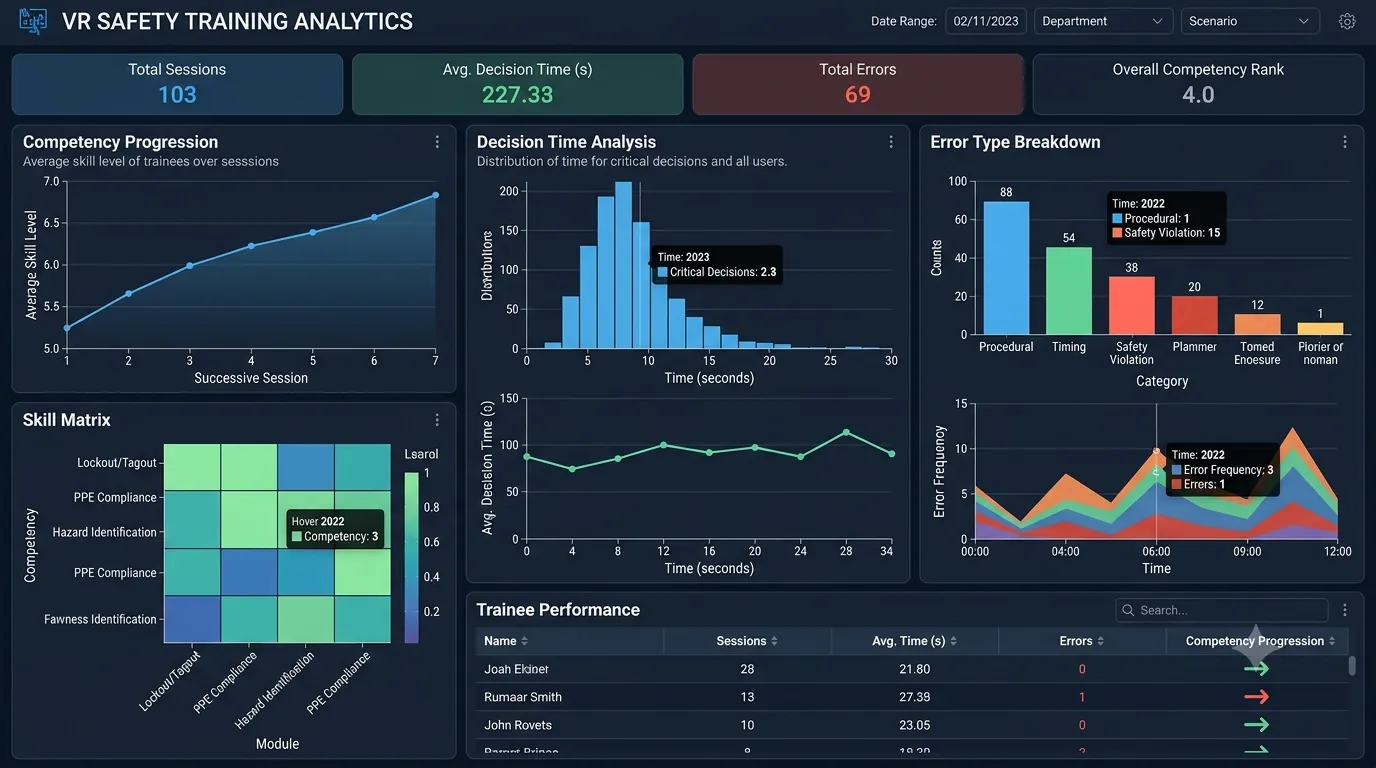
A scored assessment against the standard. On a pass, the LMS issues a dated digital certificate and logs completion, competency score and error-per-step for audit.
At SAIL Bhilai, one of India’s largest integrated steel plants, EDIIIE deployed a six-module VR safety programme to more than 5,000 workers, covering blast furnace, coke oven, rolling mill, fire response, electrical lockout and PPE. The programme standardised safety induction across shifts and sites without taking a single worker into a live hazard area to train.

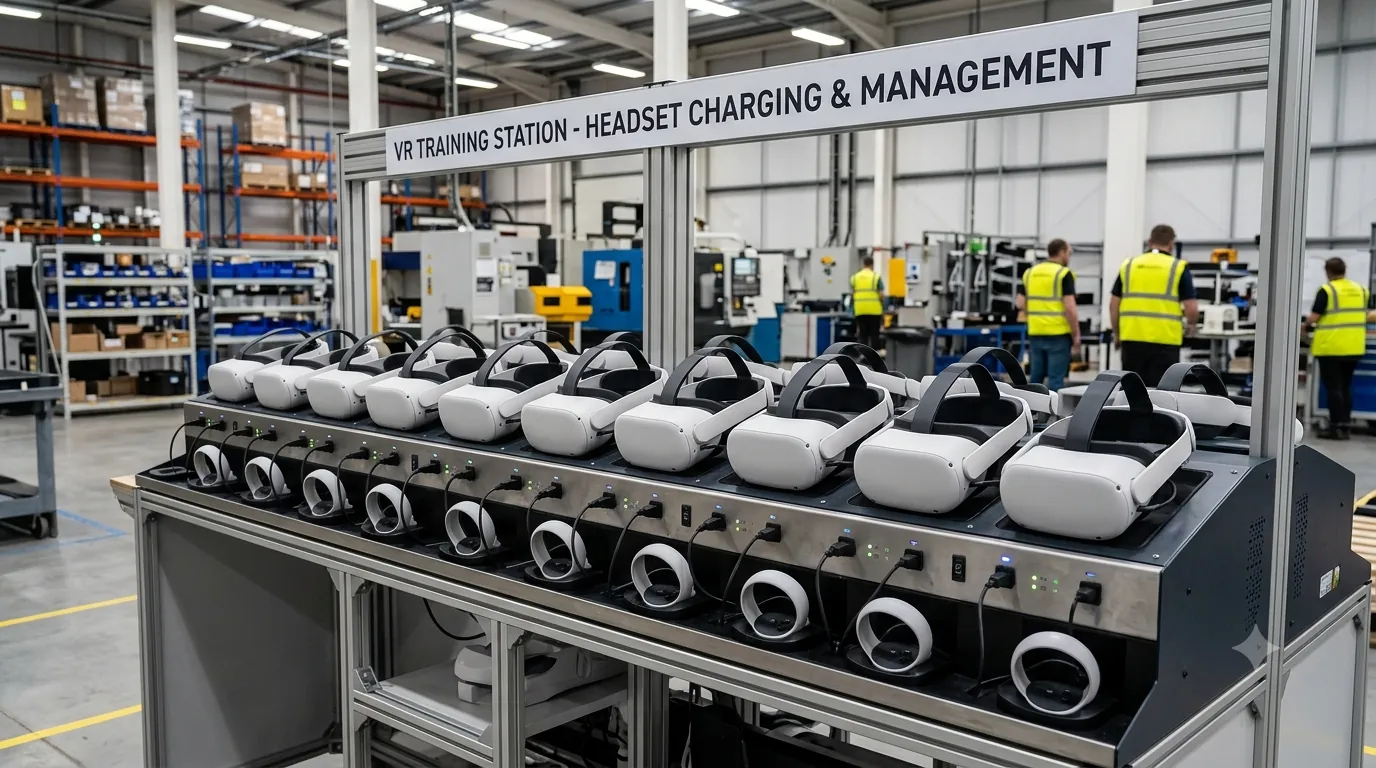
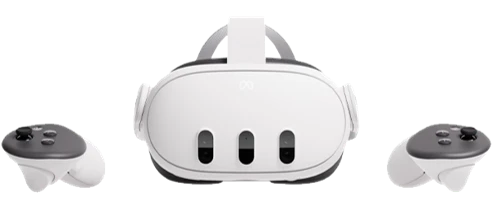
The same module ships to every site on a fleet of Meta Quest headsets with a charging station and a companion tablet for the instructor.

A rack of headsets lives at the plant. Trainees pick one up, complete the module and hand it back; scores sync to the LMS when the headset reaches Wi-Fi. No dedicated PC per seat and no simulator room to build.

Assessment mode records decision time, procedural errors and safety violations per step. The safety officer sees competency progression per trainee and per department, and the LMS issues a dated digital certificate on a pass.

Every module is built and tested for standalone Quest hardware. Headsets and the charging station can be supplied with the programme, or the module is deployed onto a fleet you already own.
This module is deployed across EDIIIE's industry programmes. Explore how it fits each sector:
Book a demo and see the Forklift & Handling module running on a headset, scored against OSHA 29 CFR 1910.178 / IS 4660 / Ergonomics.
Request this module