VR safety training with scored competency assessment and a dated digital certificate, deployable on standalone headsets across every site, in Hindi and English.
Work-at-height training must teach workers to eliminate or minimise the fall risk first, and only then to protect against a fall using the correct system, guardrails, work-positioning, or a personal fall-arrest system with a suitable anchor point. It must cover inspecting the harness and lanyard before every use, selecting an anchor rated for fall arrest, understanding fall clearance and the danger of swing-fall, and, critically, rescuing a fallen worker quickly to avoid suspension trauma. IS 3696 governs scaffolds and ladders; WFAS practice governs the fall-arrest equipment. EDIIIE’s Working at Height module trains all of this in VR at real, vertigo-inducing height that a classroom cannot convey: the trainee inspects and dons a harness, selects and connects to an anchor, identifies unsafe scaffolding, and runs a rescue-from-height drill. Every attempt is scored and certified.
This module is designed around WFAS / IS 3696 and delivered as an immersive VR simulation with three progressive modes, Learn, Practice and Assessment, with progression gated on competency. Every trainee finishes with a scored result and a dated digital certificate recorded in the LMS.
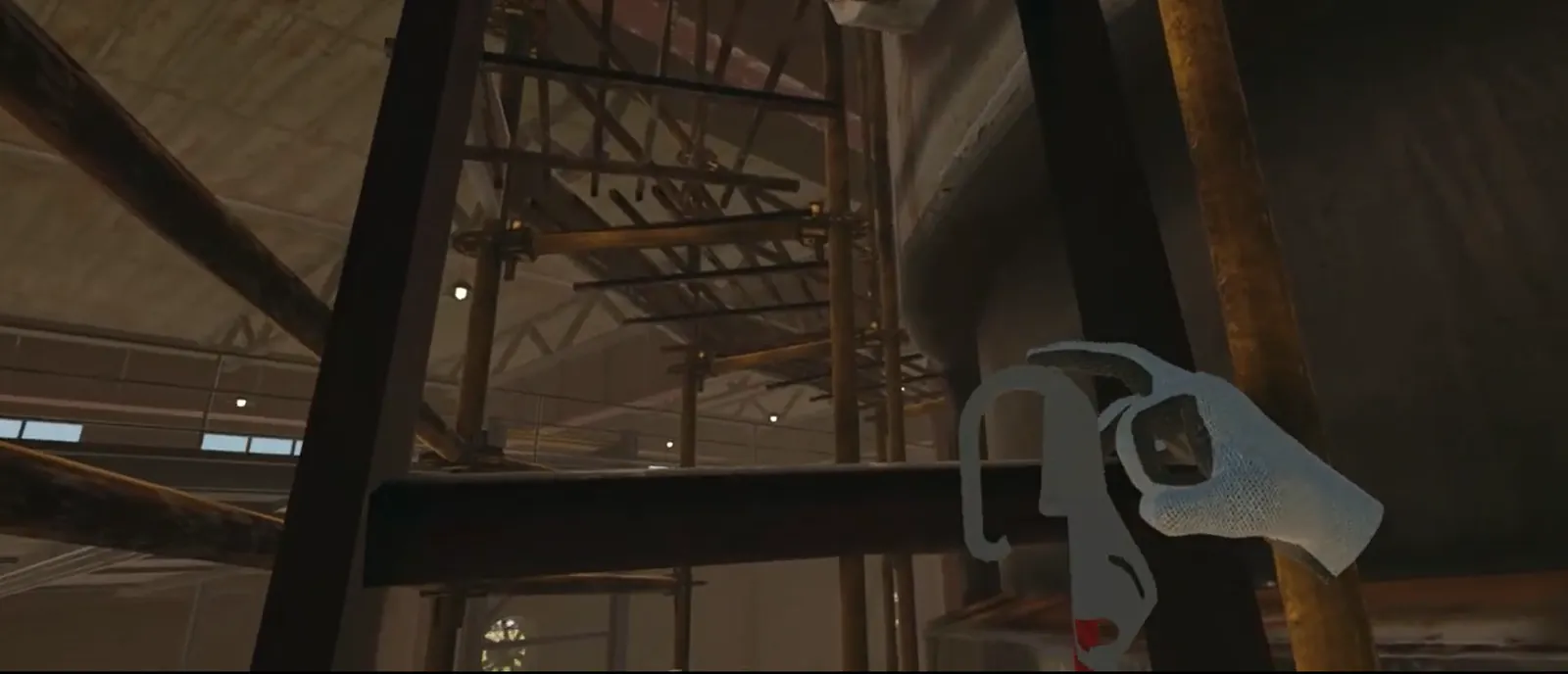
Screens from the Working at Height module. Every scenario is rebuilt from real plant conditions so the hazard, the equipment and the procedure match what the worker meets on shift.


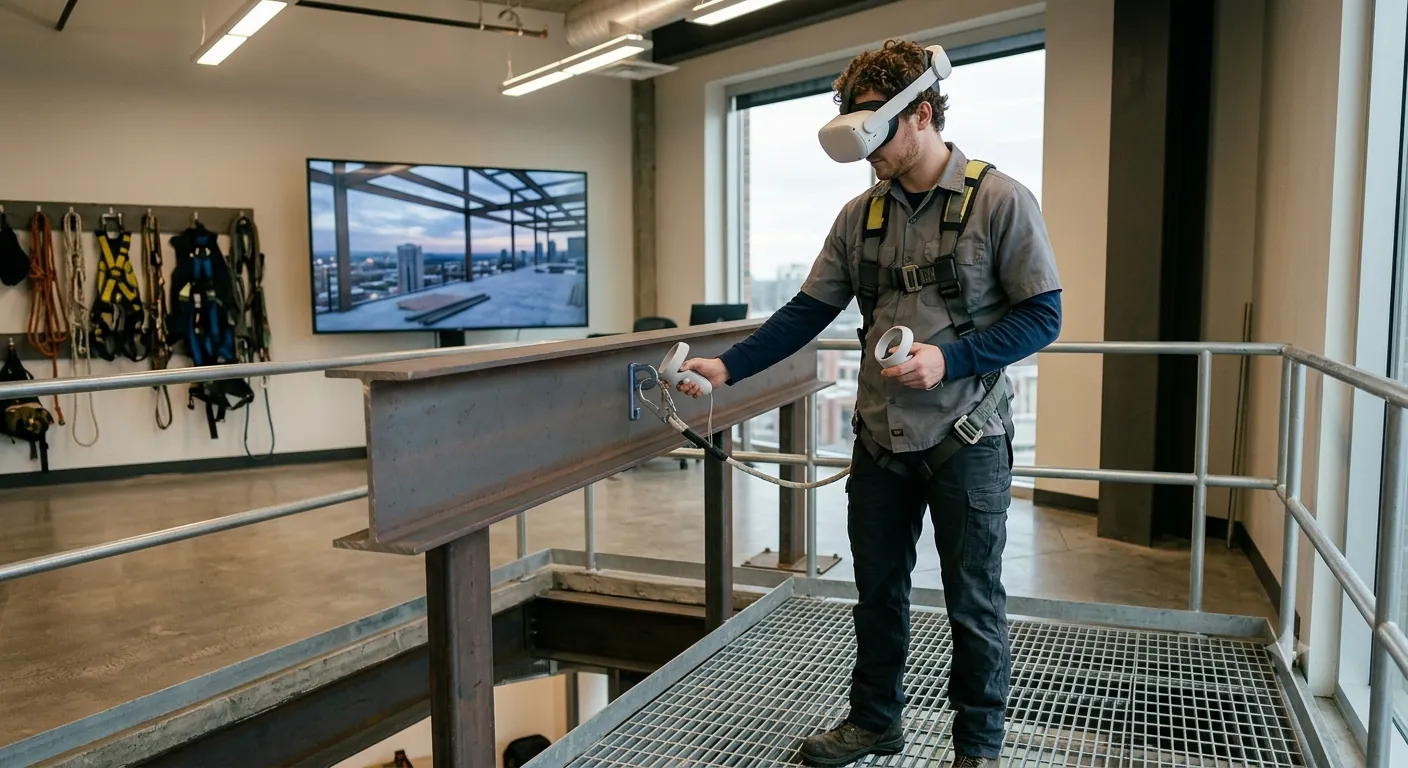
Falls from height are among the leading causes of workplace death in construction and heavy industry, and the behaviour that prevents them, clipping on every time, without exception, is a habit built through repetition under real perceived risk. A classroom cannot create the height. VR can. Standing on a simulated steel beam or scaffold at height triggers the genuine physiological response, so when the module tests whether a worker clips to a rated anchor before stepping out, it is testing behaviour under something close to real conditions. Workers consistently report the height feels real; that is precisely what makes the safe habit stick.
Most fall-protection training stops at arresting the fall and never covers what happens next: a worker suspended in a harness can suffer suspension trauma within minutes, so a rescue plan and the competence to execute it are as important as the fall-arrest system itself. EDIIIE’s module trains the rescue drill, recognising the emergency, using the rescue equipment, and getting the casualty down within the survivable window. This is the differentiator between a compliance box-tick and a programme that actually saves the person who falls.
Naming the standard is what separates a vendor page from a blog post, for a buyer and for an answer engine alike. Each element of the module is mapped to the requirement it satisfies.
| Standard | What it requires |
|---|---|
| IS 3696 | Indian safety code for scaffolds and ladders used in construction and industry. |
| WFAS (Work at Height / Fall Arrest Systems) | Selection, inspection and use of personal fall-arrest systems and anchor points. |
| Factories Act 1948 / BOCW | Statutory duty to prevent falls in factories and building & construction work. |
One module, three gated modes, the trainee cannot reach assessment until they have demonstrated the procedure in practice.
A guided walkthrough of the procedure and the standard behind it, at the trainee's own pace, with the hazard shown safely at full realism.
The trainee performs the procedure themselves in an interactive scenario, repeating until the sequence is correct. Wrong choices show their consequence safely.
A scored assessment against the standard. On a pass, the LMS issues a dated digital certificate and logs completion, competency score and error-per-step for audit.
At Hindalco’s aluminium smelters, EDIIIE’s VR anode-change programme (“Pot Processing, The Hindalco Way”) trained operators for a process that runs beside molten aluminium above 900°C, toxic fluoride fumes and high electrical current. Operators reached competency 40% faster, near-misses in live operation fell 60%, and assessed compliance scores rose 35%, all measured against the pre-VR classroom baseline.

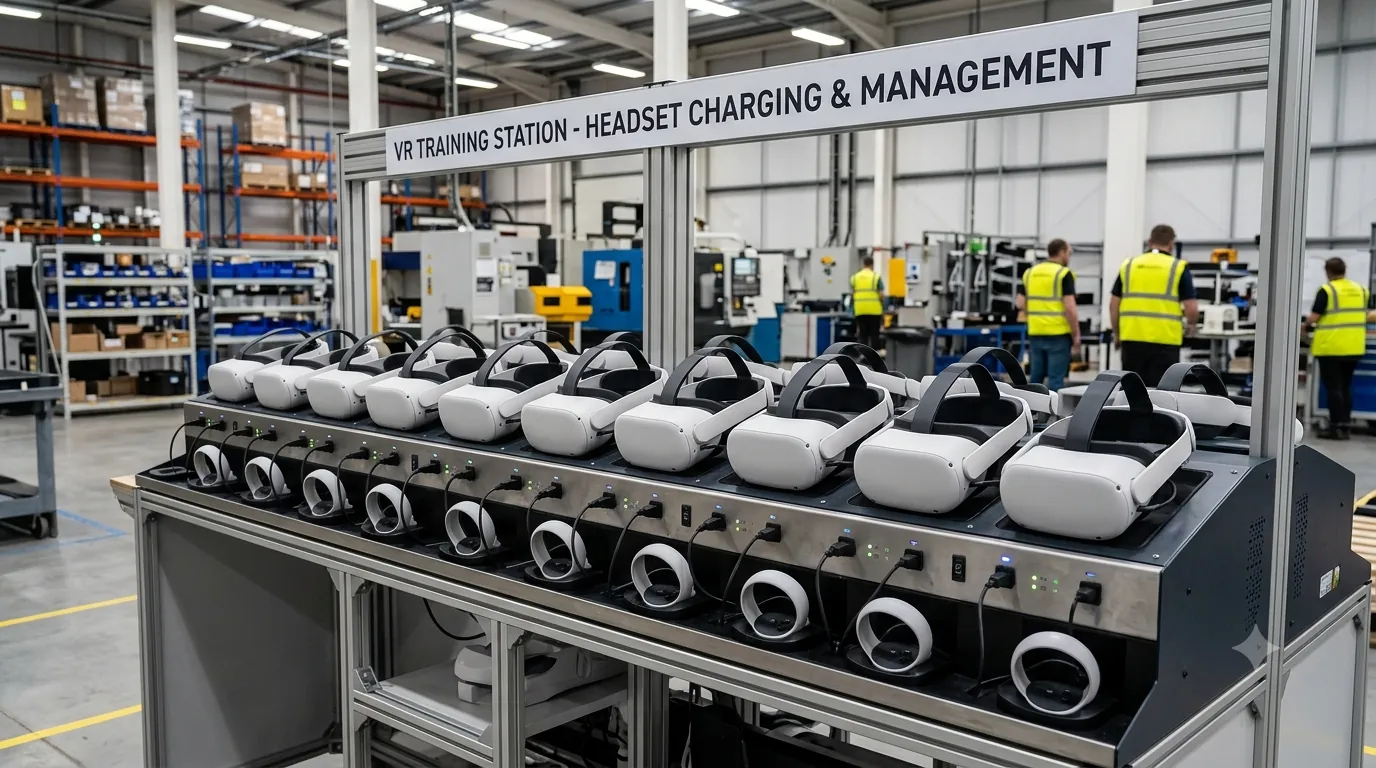
The same module ships to every site on a fleet of Meta Quest headsets with a charging station and a companion tablet for the instructor.

A rack of headsets lives at the plant. Trainees pick one up, complete the module and hand it back; scores sync to the LMS when the headset reaches Wi-Fi. No dedicated PC per seat and no simulator room to build.

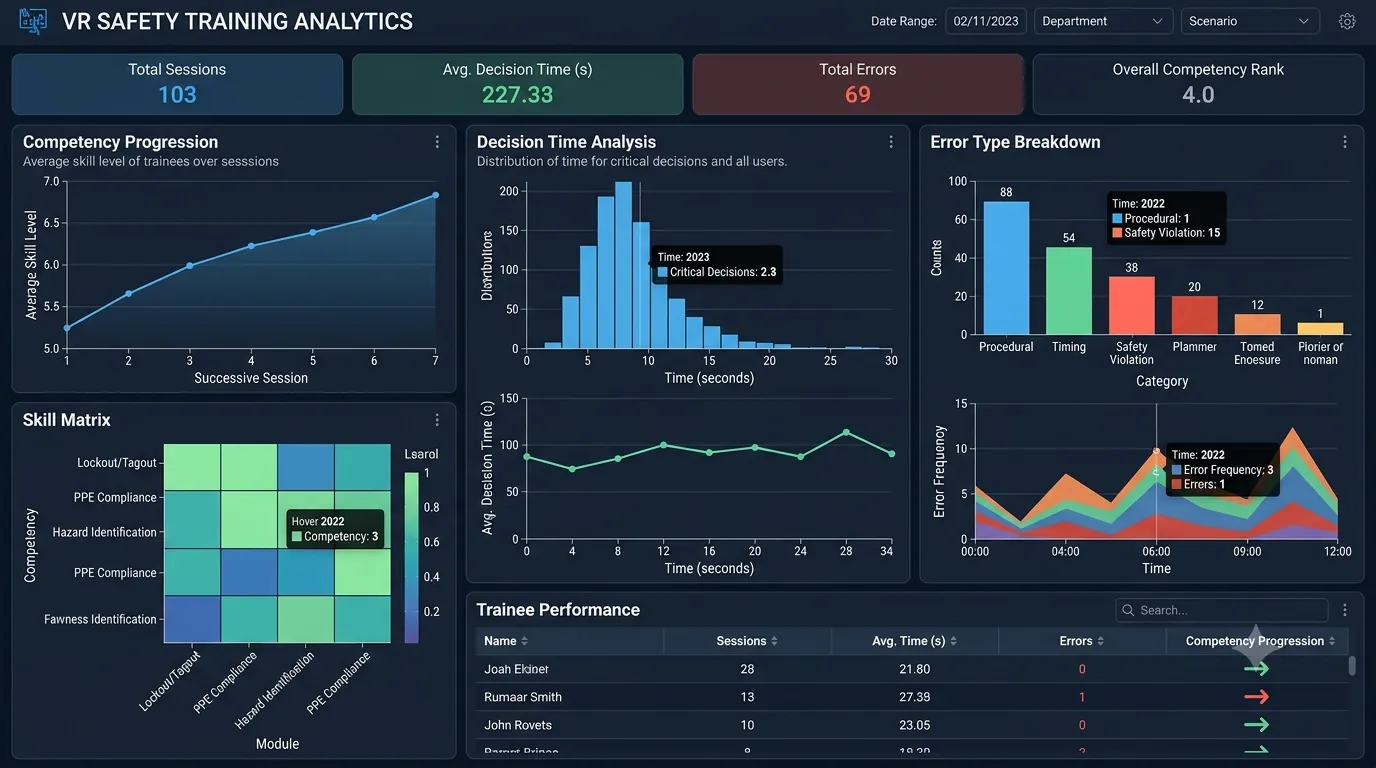
Assessment mode records decision time, procedural errors and safety violations per step. The safety officer sees competency progression per trainee and per department, and the LMS issues a dated digital certificate on a pass.

Every module is built and tested for standalone Quest hardware. Headsets and the charging station can be supplied with the programme, or the module is deployed onto a fleet you already own.
This module is deployed across EDIIIE's industry programmes. Explore how it fits each sector:
Book a demo and see the Working at Height module running on a headset, scored against WFAS / IS 3696.
Request this module