Six ready-to-license K-12 learning products — AR, VR, LMS, animations, apps and physical cards — used by global publishers and EdTech platforms. White-label under your brand and go live in 10 days, not 10 months.
Used by the world's leading publishers & EdTech platforms


Most EdTech companies and publishers spend 12–18 months building a content library. We've already done it. Our library is pedagogy-backed, curriculum-referenced, and built to plug into your platform — or we white-label the whole thing under your brand.
From kindergarten apps to secondary VR simulations — every product is real, tested, and ready to go live under your brand.


Each product is independently licensable or available as a bundled suite. Every one is white-label ready — launch under your own brand in days, not months.
Web Platform Preview

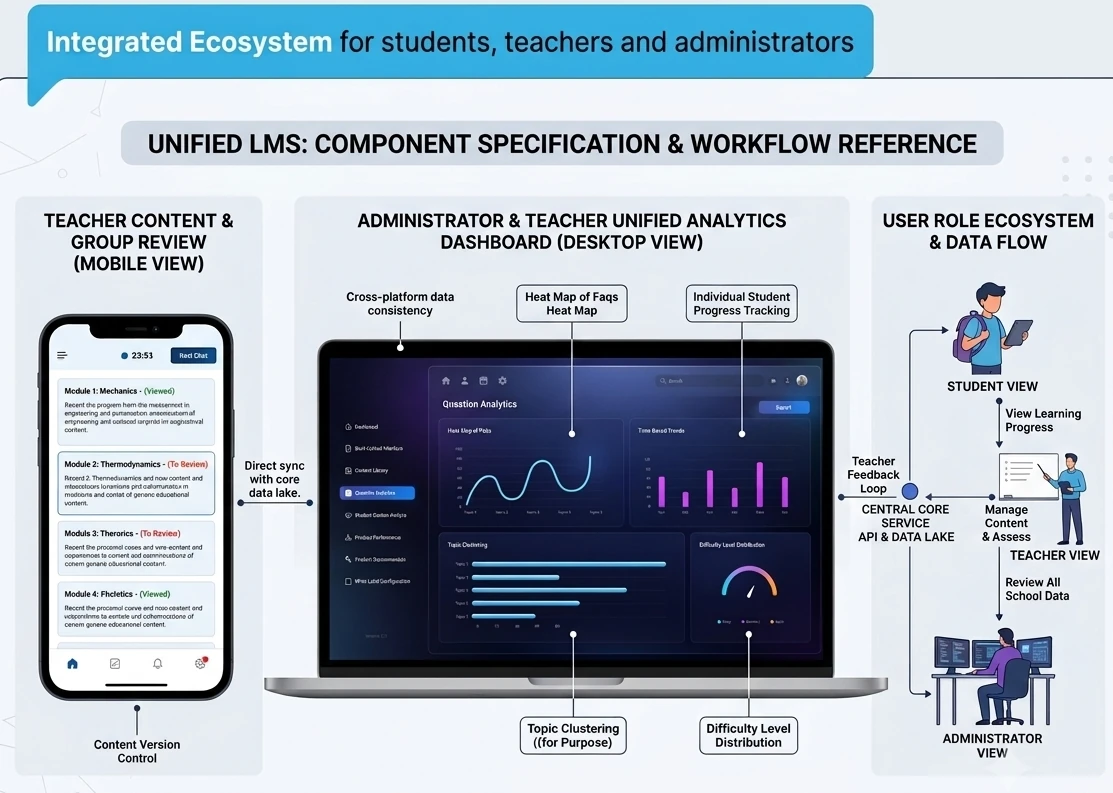
A complete web-based learning platform with integrated LMS, curriculum-aligned content, assessments, and teacher tools. Ready to deploy under your brand in 10 days. Teachers assign lessons, students learn through 3D, video and interactive content — everything tracked in one dashboard.
AR Content Library Preview

Hundreds of AR modules that bring textbook topics to life. Students point a phone at a page or marker and interact with 3D models, animations and layered information in real space. Biology, Chemistry, Physics, Maths, Geography — only used for topics where 3D genuinely helps.
VR Experience Preview

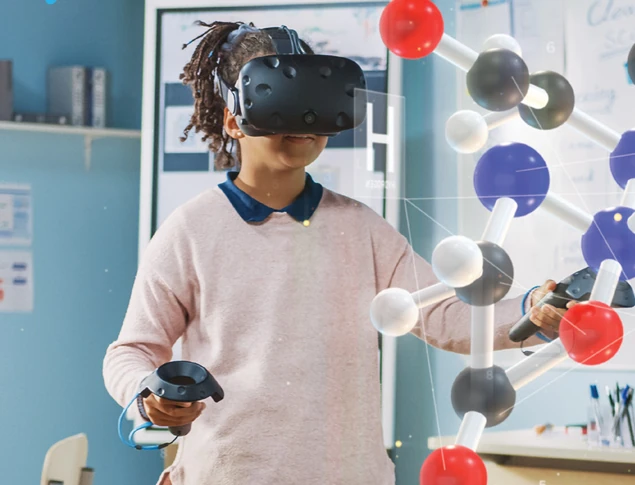
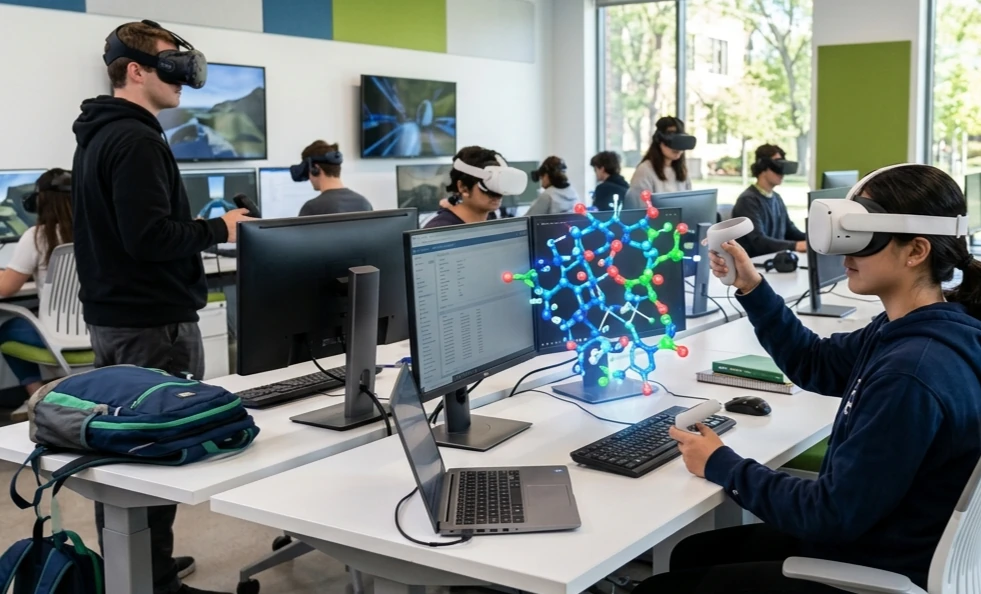
Take students inside a human cell, to the surface of the Moon, or through the chambers of the heart — without leaving the classroom. Experiences are built for topics where being inside the concept is categorically more effective than reading about it. Teacher control panel included.
AR Learning Cards Preview

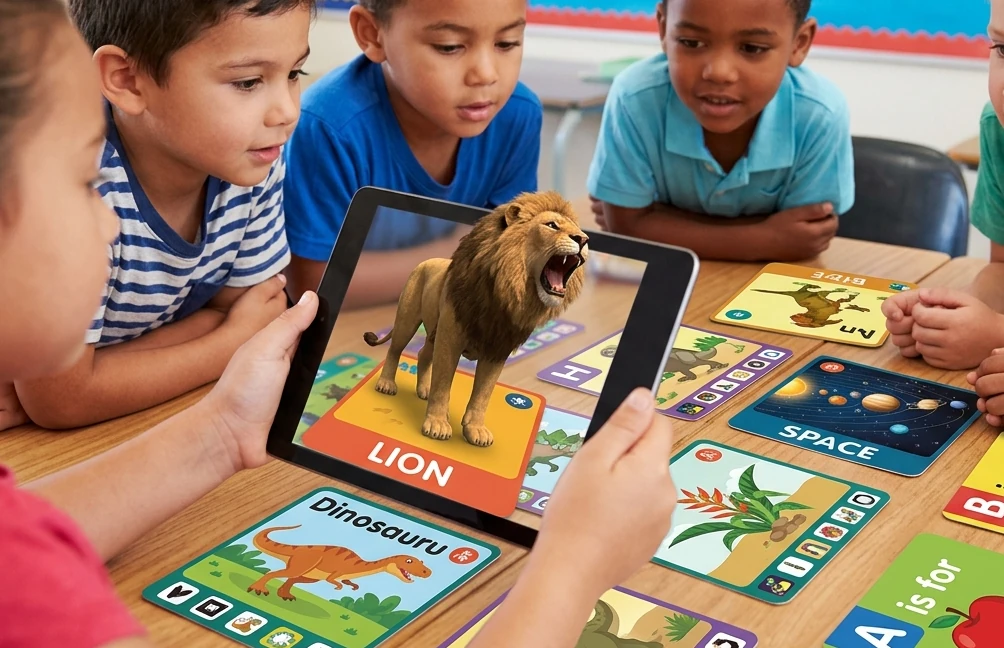
Beautifully printed physical cards that unlock 3D AR experiences through a companion app. Animals walk off the card. Numbers become puzzles. A proven bridge between hands-on physical play and digital learning for young children. Designs provided; manufacturing partner support available.
KY Learning App Preview

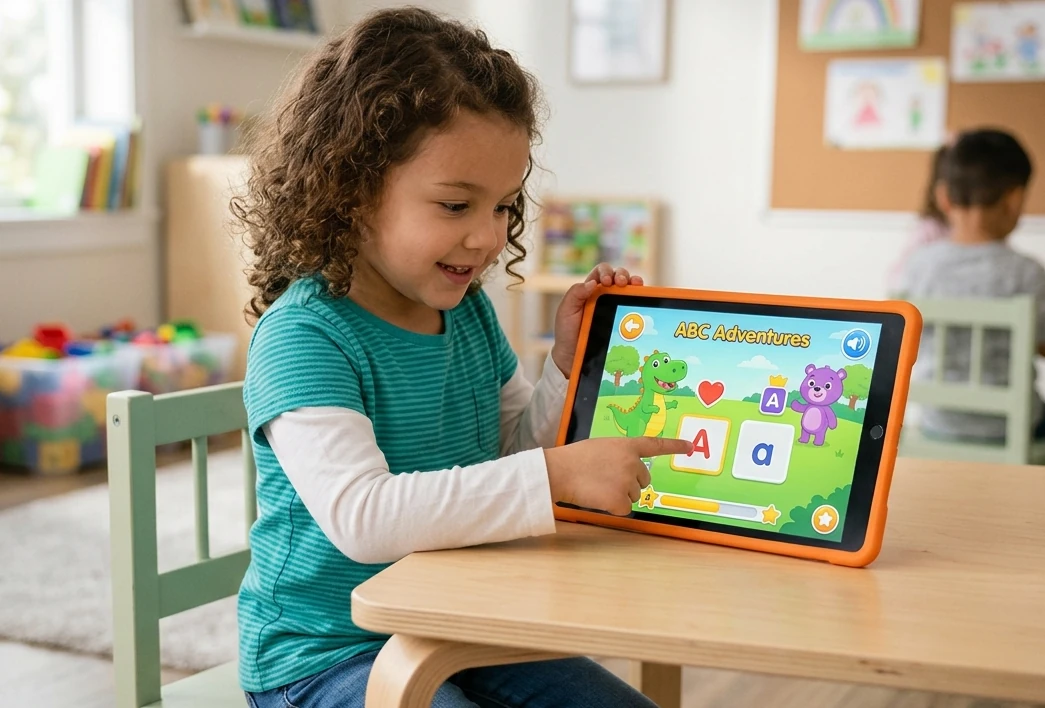
A dedicated mobile learning app for children aged 3–6. Foundational literacy, numeracy and life skills delivered through stories, songs, games and loveable interactive characters — in a safe, distraction-free environment. Sessions are 4–8 minutes, matched to a young child's attention span.
2D Animations Preview

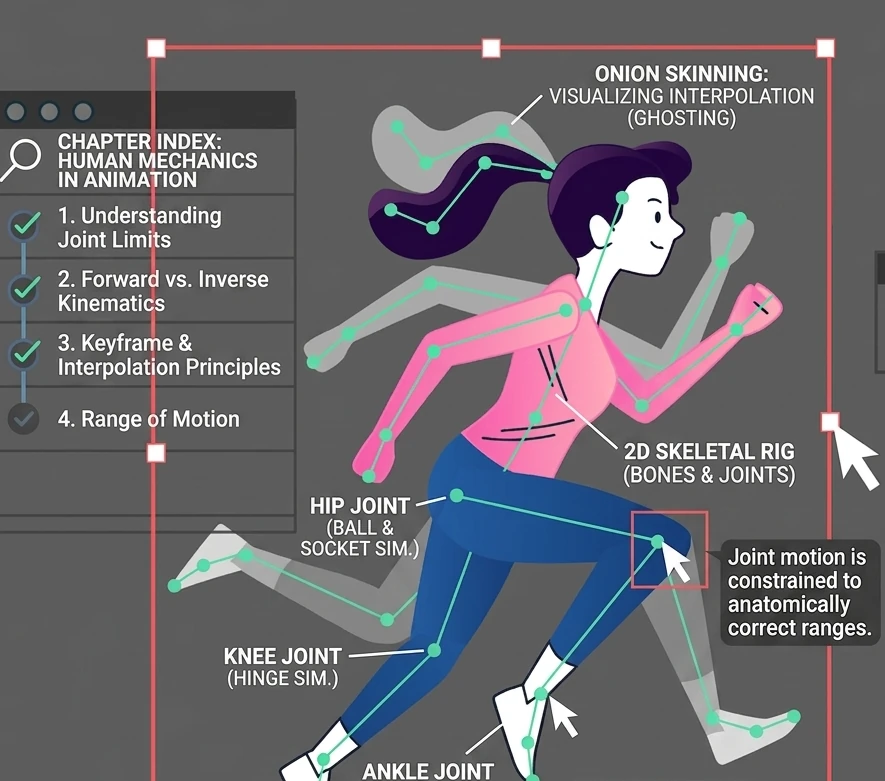
A mobile app with a growing library of high-quality 2D animated explainer videos for primary and middle school. Each video is 3–6 minutes, addresses one specific concept, and is followed by a formative quiz. Multiple languages, offline playback, and teacher analytics built in.
Not sure which products fit your platform?
Book a 30-Minute Demo CallThree steps. No guesswork. We handle the heavy lifting.
Pick one product or a bundled suite. We walk you through what's available, what fits your audience, and what your market expects — before you commit to anything.
We white-label everything — app icons, UI, loading screens, brand colours, custom domain. Your learners see your brand. Not ours. Custom characters and themes available on request.
Go live in 10 days. Our team stays on for integration support, curriculum mapping, and ongoing content updates as your platform grows and your markets evolve.
When you license our products, you are building on a platform that has already been tested across millions of learners across multiple continents and curriculum frameworks.
Tell us your curriculum — we'll map our content against it at no cost, before you commit.
Whether you are a global publisher, a growing EdTech platform, or a school network — the same library powers each use case, configured for your audience.
Add a world-class digital dimension to your print product. Your students and teachers get an immersive extension of the textbook — under your brand, mapped to your chapters.
Populate your platform with a complete, ready-made content library. License what you need, embed via API or SDK, and go to market with full content coverage from day one.
Offer member schools a unified digital learning platform. Central admin, school-level dashboards, teacher tools and parent communication — all built in and manageable at scale.
Not every concept needs a simulation. Our pedagogy team decides the right format per topic — so learners get the most effective experience, not just the most impressive one.
Assessments progress through all six cognitive levels — not just recall and recognition, but application, analysis and higher-order thinking.
Hands-on biology, chemistry and physics simulations that let students run experiments impossible in a normal classroom — safely, repeatably and at any scale.
Cell structure, human body systems, genetics and ecosystems in interactive 3D — from macroscopic anatomy down to microscopic detail.
Reactions, titrations and molecular-geometry experiments with zero risk and zero consumables — repeated as often as a concept requires.
Forces, circuits, optics and wave behaviour that are hard to observe in a real lab — with variables students can change and measure themselves.
Purpose-built for spatial and abstract concepts where 2D textbooks and static diagrams underperform.
Our formats are chosen because independent research — not marketing — shows immersive and experiential learning drives engagement, recall and confidence.
A PwC study of VR-based learning found learners completed training up to four times faster than in the classroom, with markedly higher confidence to apply what they learned.
Cognitive-science research on experiential and active learning consistently shows better long-term retention than passive reading or lecture for the same content.
Studies on spatial learning show 3D and immersive media improve understanding of inherently spatial topics — molecular geometry, anatomy, astronomy — over 2D representations.
Figures are drawn from independent, publicly available research on immersive and experiential learning (including PwC's enterprise VR-learning study). We can share the underlying sources and map expected outcomes to your specific curriculum on request.
Everything publishers, platforms and school networks need to adopt with confidence — mapped to standards, compliant with student-data law, accessible by design and backed by teacher support.
Content mapped to NEP 2020, CBSE and ICSE (India), plus NGSS and Common Core (US), Cambridge, IB and UK National Curriculum — with free custom mapping on request.
Built to support the obligations publishers and schools face — COPPA and FERPA (US), GDPR-K (EU) and India's DPDP Act — with data-handling documentation available for procurement reviews.
Designed to WCAG 2.1 and Universal Design for Learning (UDL) principles — multiple means of representation and engagement so more learners can access the same content.
Professional-development resources, onboarding and adoption support — so teachers are confident using immersive content from day one, not left to figure it out alone.
Optional AI tutor that personalises pathways and answers student questions in context — turning a static library into a responsive, one-to-one learning companion.
Headsets and tablets managed at classroom and district scale — mobile device management (MDM), kiosk lockdown, remote content push and shared-device hygiene, so IT teams deploy and control fleets without per-device effort.
Candid conversations with publishers, platform builders and school networks from around the world. No sales pitches — just insight on what's shifting and what to do about it.
How the shift to digital content is reshaping publisher business models — and the practical steps organisations are taking to stay relevant in a rapidly changing market. Covers format strategy, platform vs. content decisions, and real examples of publishers who've made the transition.
Watch RecordingA frank look at where immersive technology is genuinely improving learning outcomes — and where it is falling short. Based on real deployment data from schools across Asia and Africa, covering engagement metrics, teacher adoption, and what it takes to make VR work at classroom scale.
Watch RecordingThe fastest-growing EdTech markets are outside Europe and North America. What does it take to build products that work for these learners — technically, pedagogically, and commercially? Covers localisation, connectivity constraints, curriculum alignment, and go-to-market approaches.
Watch RecordingThe window for publishers to own their digital future is narrowing. We look at the decisions publishers need to make today — on content formats, platform strategy, and partnership models — to remain competitive in a market where EdTech platforms are setting the pace. Includes case studies from publishing organisations that have made the shift.
Register FreeTell us about your platform or organisation and what you're trying to build. We'll suggest the right products, walk you through white-labelling, and show you how fast you can go live.
Questions commonly asked by training managers, safety officers, and procurement teams — answered directly.
Have a question not answered here?
Ask Us Directly