Book a DemoBack to Home
Mixed Reality Industrial Training
Mixed Reality Solutions

Reality, Redesigned
For Enterprise Training.

Mixed Reality merges the physical and digital in a single view — letting workers interact with virtual objects, live data, and remote instructors while remaining fully in their real environment. It's the most powerful tool for collaborative training, complex procedure guidance, and hybrid simulation.

50%
Faster Decision Making
65%
Fewer Procedural Errors
10+
Years of XR Expertise
170+
Projects Delivered
The Problem

When VR or AR Alone Isn't Enough

Some scenarios require simultaneous interaction with both real equipment and simulated data, shared between multiple people. Mixed Reality is built exactly for that.

Collaborative Training at Scale
Multi-person sessions where instructors and trainees need to interact with shared 3D content in the same physical space cannot be delivered effectively by VR or AR alone.
Design Review Before Build
Engineering teams need to evaluate facility layouts and equipment placement in 3D at full scale — before committing to expensive construction or procurement.
Human-Machine Integration Training
Workers learning to operate alongside robotic systems need to practise spatial and procedural interactions without live equipment risk.
Data-Rich Operational Environments
Operators managing complex systems need live data spatially overlaid on the physical equipment it relates to — for faster diagnosis and safer decisions.
Our MR Approach

What EDIIIE Mixed Reality Delivers

We build MR experiences that blend your real environment with digital content in ways that are spatially accurate, interaction-ready, and calibrated to your actual equipment.

Shared Multi-User Environments
Multiple users in the same physical space interact with the same virtual objects — instructors guide, trainees practise, remote participants join. All in real time.
Spatial 3D Model Overlay
Virtual equipment models, assembly components, or infrastructure layouts placed precisely in physical space — walk around, inspect, and interact with digital objects at full scale.
Live Data Visualisation
Operational data — pressure, temperature, equipment status — displayed spatially on the physical systems they describe. Reduces cognitive load during complex operations.
Instructor-Led MR Sessions
Remote or co-located instructors share annotations, highlight components, and guide trainees through procedures in real time with full spatial context.
Pre-Commissioning Walkthroughs
Walk through a new facility or production line in mixed reality before construction is complete — identifying design conflicts and training gaps months early.
Hardware-Flexible Deployment
Compatible with leading MR devices including HoloLens 2 and Magic Leap — deployed standalone or integrated with existing training infrastructure.
Applications

Where Mixed Reality Delivers Most

MR excels where collaboration, spatial accuracy, and simultaneous interaction with real and virtual elements are all required.

Complex Maintenance Procedures
Virtual overlays on live equipment show internal layouts, torque specs, and step-by-step instructions mapped spatially onto the actual machine.
Engineering Design Reviews
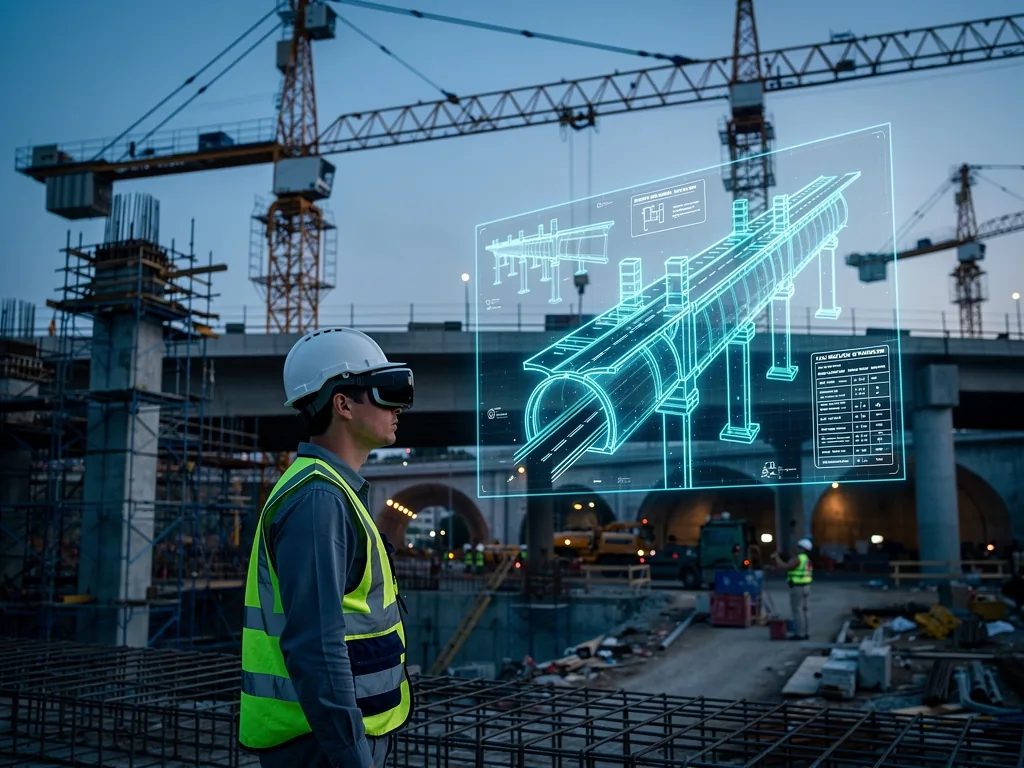
Architecture and engineering teams conduct spatial walkthroughs of 3D models at 1:1 scale — identifying clashes before a single brick is laid.
Cobot & Automation Training
Workers practise safe interaction protocols with collaborative robots — spatial boundaries, emergency stops, and workflow integration in a risk-controlled environment.
Control Room Simulation
Operators train on mixed reality control panels mirroring real systems — building procedural fluency for complex shutdowns, startups, and emergency responses.
Remote Expert Training Delivery
Subject matter experts deliver training to distributed teams in a shared MR space — annotating shared 3D content without anyone needing to travel.
Factory Layout Optimisation
Production engineers simulate equipment placement and workflow routing in a spatially accurate MR environment — before physical changes are made.
Choosing the Right Modality

VR, AR or MR — Which One, When?

Mixed Reality is not always the answer. Here is the honest decision framework we use with clients before recommending a modality.

Choose VR when…

The task is dangerous, remote or impossible to stage in reality — high-hazard drills, off-site or decommissioned environments, full-immersion scenario training where the real world should disappear entirely.

Choose AR when…

The worker must stay hands-on with real equipment — guided maintenance, on-the-job instructions and remote assistance, where a light digital overlay on the real world is all that is needed.

Choose MR when…

You need both at once — high-fidelity virtual content anchored precisely to real equipment, multiple people interacting with the same 3D model in a shared physical space, or spatially-accurate design and control-room work.

The Technology & Commercials

How EDIIIE Delivers Mixed Reality

Purpose-built MR — not a repackaged off-the-shelf tool — anchored accurately, tuned per device, and justified on ROI.

Build vs Buy

Off-the-shelf tools like Dynamics 365 Guides and Remote Assist are excellent for generic workflows. We deliver custom MR when you need your exact assets, procedures and integrations — or we integrate alongside those tools where they already fit.

Spatial Anchoring & Twin Registration

Spatial mapping and anchoring register virtual content — and digital-twin models — to the real asset with high precision, so overlays stay locked in place as users and equipment move.

Device & Passthrough Tuning

Field of view and passthrough fidelity differ sharply across HoloLens 2, Magic Leap 2 and video-passthrough headsets. We match the experience and content design to each device's optical strengths and limits.

Next-Gen MR Roadmap

High-resolution passthrough headsets — including Apple Vision Pro and the emerging class of spatial computers — are expanding what enterprise MR can do. We build with an upgrade path so today's content carries forward.

MR-Specific ROI

MR pays back where it removes travel for design reviews and expert support, compresses complex-maintenance time, and prevents costly errors on high-value assets — measurable against travel spend, downtime and rework.

In Deployment

MR Solution in Action

Real deployments. Enterprise environments. Measurable outcomes.

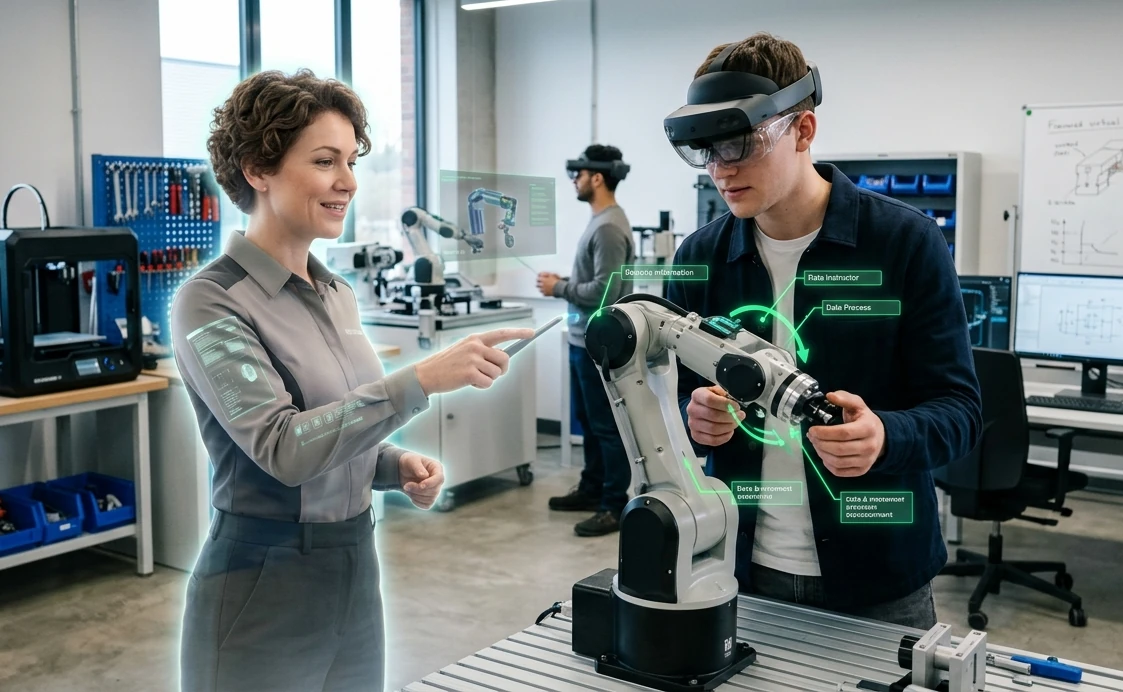
MR Overlay on Industrial Equipment

MR Overlay on Industrial Equipment

images/mr-industrial-overlay.png

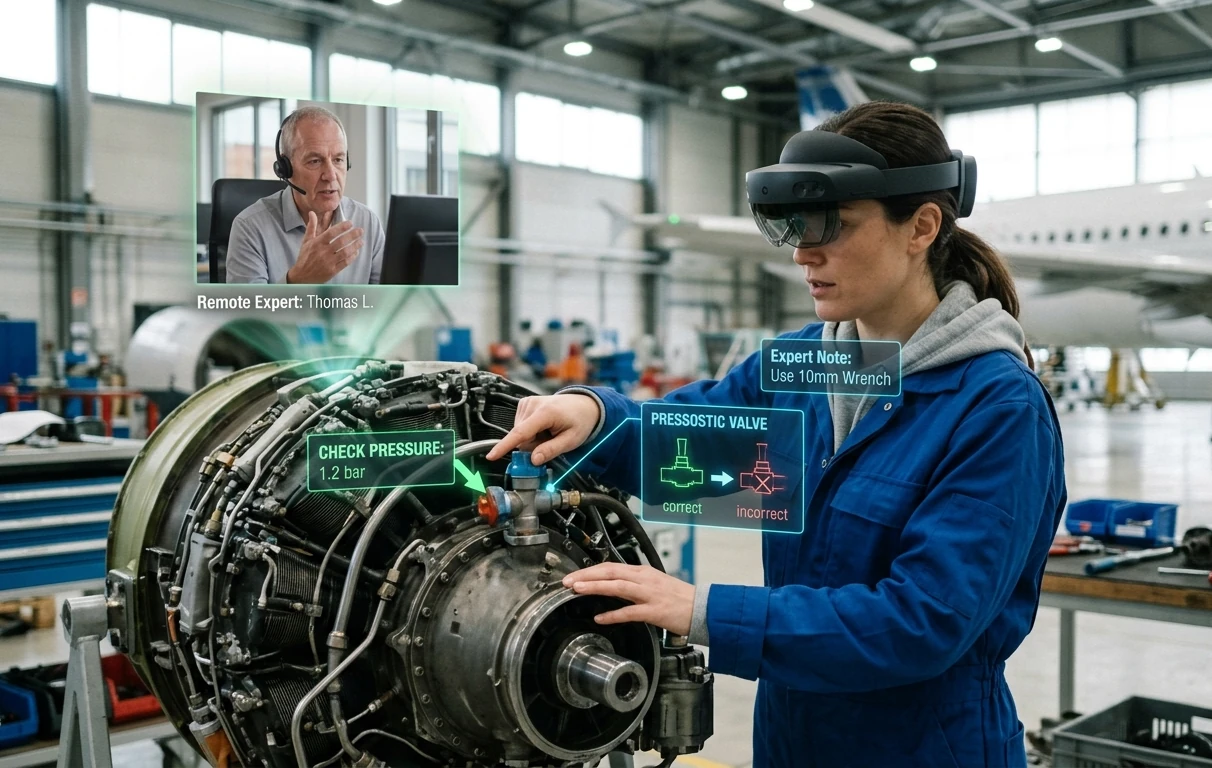
MR Maintenance Guidance — Step-by-Step Overlay

MR Maintenance Guidance — Step-by-Step Overlay

images/mr-maintenance.png

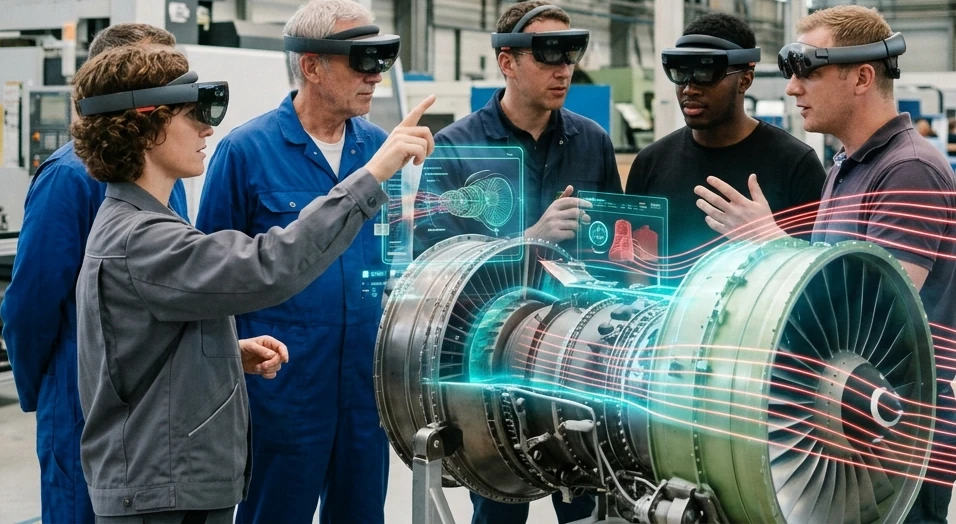
MR Remote Guidance — Collaborative Support

MR Remote Guidance — Collaborative Support

images/mr-remote-guidance.png

The EDIIIE Difference

Why Organisations Choose Us

We are not a generic content studio. We are an immersive simulation company with domain expertise across every sector we serve.

Process-Accurate Simulation
Built from your SOPs, engineering drawings, and equipment specs — validated by your SMEs before any deployment.
End-to-End Delivery
Strategy, design, development, deployment, and analytics — all from one team. No fragmented vendors, no gaps.
200+ In-House Specialists
Developers, 3D artists, instructional designers, and domain experts — all in-house for quality and speed.
Proven at Global Scale
170+ enterprise projects across defence, heavy industry, aerospace, healthcare, and government worldwide.
Explore What Mixed Reality Can Do for Your Organisation

Whether you're redesigning a facility, deploying complex equipment, or training distributed teams — we'll find the right MR approach for your challenge.

Frequently Asked Questions

Common Questions

Questions commonly asked by training managers, safety officers, and procurement teams — answered directly.

Mixed reality (MR) blends the physical and digital worlds so that virtual objects appear to exist in and interact with real physical space. Unlike VR (fully virtual environment) or standard AR (digital overlay on real world), MR allows a user to see and manipulate virtual objects anchored to their actual surroundings — a virtual control panel mounted on a real surface, a 3D plant model placed on a real conference table, or a virtual colleague appearing to stand in the same room. Enterprise MR runs on devices like Microsoft HoloLens 2 and Meta Quest 3 in passthrough mode.
Key industrial applications include: remote expert assistance (a field technician in MR receives real-time annotations and 3D guidance from a remote expert who sees their live view), collaborative design and pre-commissioning reviews (multiple stakeholders see and interact with the same 3D plant model in real space), hybrid training (trainees interact with virtual equipment components in a real training room), and spatial planning (placing virtual machinery or infrastructure in a real space to verify fit and access before committing to physical installation).
Microsoft HoloLens 2 is the primary enterprise MR device for high-precision industrial applications — it offers accurate spatial mapping, wide field of view, and industrial certification. Magic Leap 2 is used where a wider field of view is prioritised. Meta Quest 3 supports passthrough MR at a lower price point, suitable for applications where full spatial precision is less critical. For most industrial deployments, device selection is driven by the specific use case, required field of view, and whether the environment requires certified intrinsically safe equipment.
Yes — this is one of the most commercially proven MR applications in industry. A field technician wears an MR headset; a remote expert sees a live feed of exactly what the technician sees and can annotate it in real time — drawing arrows, placing labels, and inserting 3D reference models directly into the technician's field of view. This removes the need for the expert to travel to remote or international sites.
Multiple participants — in the same room or joining remotely — can view and interact with the same 3D model at full scale in real space. They can walk around it, highlight components, run simulations, take measurements, and make annotations that all participants see simultaneously. For pre-commissioning reviews, this allows design engineers, safety teams, and operations staff to identify access, maintenance, and safety issues in the virtual model before the physical plant is built.
Enterprise MR headsets are deployed in steel plants, oil refineries, and aircraft maintenance facilities globally. Key considerations are ambient lighting (strong direct sunlight can affect spatial tracking on some devices), PPE compatibility (we assess headset fit with required safety equipment for every deployment), connectivity requirements (we support local network operation without cloud dependency), and battery life for extended shifts.

Have a question not answered here?

Ask Us Directly