Book a DemoBack to Home
VR Training Simulation
VR Training Solutions

Enterprise VR Training
Built to Last.

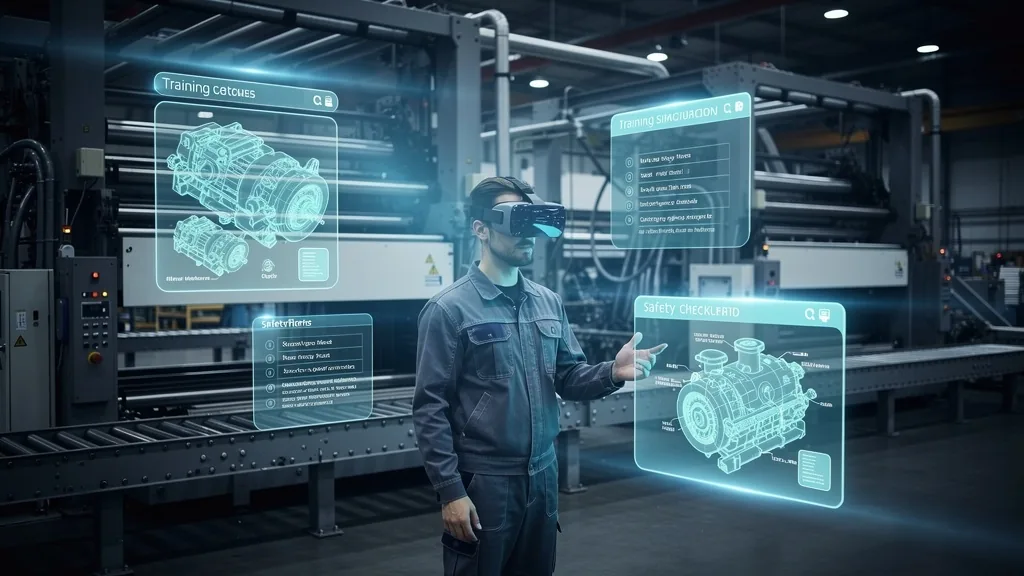
Fully immersive, photorealistic VR training environments for safety-critical industries. Eliminate real-world risk during training, standardise competency across sites, and measure every learner's performance in real time.

75%
Reduction in Training Time
80%
Fewer Workplace Incidents
170+
Projects Delivered
10+
Years of Expertise
The Problem We Solve

Why Traditional Training Falls Short

High-hazard industries cannot afford to train workers on live equipment. VR removes the risk entirely — without removing the realism.

Live Training is Dangerous
Training on active production equipment, high-voltage systems, or in hazardous environments exposes workers to real injury risk during the learning curve — before competence is established.
Production Downtime is Costly
Stopping machinery or taking equipment offline for training exercises halts production. In high-output environments, every hour of downtime translates directly to lost revenue and disrupted schedules.
Inconsistency Across Sites
Instructor-led training varies in quality and completeness across facilities. Organisations with multiple sites struggle to ensure every worker receives the same standard — leaving dangerous knowledge gaps.
Scale is a Bottleneck
Onboarding hundreds of new workers, certifying distributed teams, or retraining after process changes requires resources traditional training simply cannot scale to meet — on time, every time.
Our VR Approach

What EDIIIE VR Training Delivers

We don't build generic VR content. Every simulation is process-accurate, validated by your engineers, and designed to drive measurable competency outcomes.

Photorealistic Environments
3D recreations of your actual facility, equipment, and workflows — built from engineering drawings, photos, and SME input. Workers train on exactly what they'll face on the job.
Learn, Practice & Assess Modes
Guided Learn Mode walks trainees through procedures step by step. Practice Mode lets them attempt independently. Assessment Mode scores performance with error detection and real-time feedback.
Real-Time Analytics Dashboard
Training managers get live visibility into every session — competency scores, error patterns, completion rates, and time-on-task. Exportable reports for compliance and audit purposes.
Multi-Site Deployment
Cloud, on-premise, or hybrid deployment across any number of sites. Standalone VR headsets mean no dependency on internet connectivity on the factory floor or remote site.
LMS Integration
SCORM and xAPI compatibility for seamless integration with your existing Learning Management System. Training completions and scores flow directly into your compliance records.
Multi-Language Support
Narration, instructions, and UI available in multiple languages — ensuring consistent training quality across diverse, multilingual workforces at regional and global scale.
Training Applications

What We Build VR Training For

From first-day induction to advanced operator certification — VR training covers the full spectrum of workforce development needs.

Safety & Emergency Response
Fire drills, chemical spill response, confined space rescue, electrical hazard awareness, and emergency evacuation — practised repeatedly in a zero-risk environment with full scenario fidelity.
Equipment Operation & Maintenance
Step-by-step guided procedures for complex machinery — from assembly lines and CNC machines to turbines and switchgear. Fault diagnosis, maintenance walkthroughs, and tool interaction with real-time feedback.
Workforce Onboarding
Standardised site induction, hazard identification, and procedural orientation for new hires — consistent across every site, delivered at scale, and completed before the worker sets foot on the live floor.
Compliance & Certification
Documented assessment trails, automated scoring, and digital certificates aligned to statutory safety requirements — making compliance audits straightforward and records always current.
Clinical & Medical Skills
Procedure practice for clinicians without patient risk — emergency response, surgical simulation, medical device operation, and clinical scenario training with outcome-based performance scoring.
Defence & Tactical Training
Mission rehearsal, weapon system familiarisation, and tactical scenario training — high-fidelity simulations built to defence-grade specifications for operational readiness without ordnance or live risk.
The Learning Science

Why VR Training Works

VR is effective for a reason rooted in how people actually learn — not novelty. Four mechanisms make immersive training stick where slides and videos do not.

Learning by Doing
Active, first-person practice produces far stronger recall than passively watching a video or reading a manual — learners build the procedure by performing it, not by memorising it.
Spaced Repetition
Because a headset session costs nothing to repeat, workers can rehearse a high-risk task as many times as competency requires — reinforcing memory across spaced sessions rather than a single one-off drill.
Muscle-Memory Transfer
Performing the real physical motions — reaching, isolating, sequencing — builds procedural muscle memory that transfers directly to the plant floor, unlike screen-based click-through training.
Emotional Salience
Experiencing a simulated emergency — a fire, a gas leak, an arc flash — creates the emotional imprint that makes the correct response instinctive under real stress, safely and repeatably.

Independent research on immersive learning (including PwC's enterprise VR study) reports faster training and higher confidence versus classroom methods; we map expected outcomes to your specific programme and share the underlying sources on request.

Delivery, Compliance & Commercials

How We Build, Deploy & Price It

From a first brief to a certified, centrally-managed headset fleet — and the commercial models that fit how you want to buy.

Content-Development Process
Discovery and SOP capture, SME validation, build (typically 6–10 weeks per module), pilot, then rollout — with a defined update cycle so content stays current as procedures and equipment change.
Compliance & Certification
Modules are mapped to the standards you report against — OSHA, ISO 45001, the Factories Act and sector regulations — with scored assessment and auto-issued digital certificates that feed your training records.
Headset Fleet Management
Mobile device management (MDM), kiosk-mode lockdown, remote content push and provisioning — so a fleet of headsets across multiple sites is updated and controlled centrally, not device by device.
Multiplayer & Collaborative VR
Networked, multi-user scenarios let teams train together in the same virtual environment — team drills, role-based coordination and instructor-led exercises across co-located or remote participants.
Flexible Engagement Models
Buy the way that suits you — per-seat licensing, fixed per-project builds, or an annually-licensed content library — with clear scope so training budgets are predictable.
Comfort & Accessibility
Sessions are designed to minimise cybersickness — comfortable locomotion, seated modes and paced onboarding — so first-time and long-duration users can train without discomfort.
The EDIIIE Difference

Why Organisations Choose Us

We are not a generic content studio. We are an industrial simulation company with domain expertise across the sectors we serve.

Process-Accurate Simulation
Every environment is built from your actual SOPs, engineering drawings, and equipment specifications — validated by your SMEs before any deployment.
End-to-End Delivery
Strategy, content design, development, deployment, and analytics — all from one team. No fragmented vendors, no gaps in accountability.
200+ In-House Specialists
Our team of developers, 3D artists, instructional designers, and domain experts works entirely in-house — giving you quality control and speed that outsourced models cannot match.
Proven at Global Scale
170+ enterprise projects across defence, heavy industry, aerospace, healthcare, and government — on every continent. We have solved deployment challenges that most VR studios have never encountered.
Proven Results

VR Training in Action

Real enterprise deployments. Measurable outcomes. Verified by clients.

Aluminium Smelter VR Safety Training
Aluminium Manufacturing
Hindalco
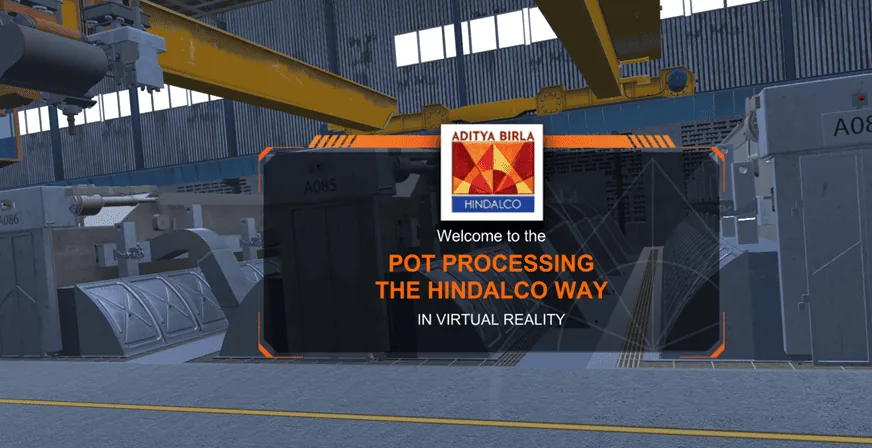
VR Pot Processing Safety Training for Anode Change Operations
↑40%
Faster Mastery
↓60%
Near-Misses
100%
Safe Training
Read Case Study
Metro Rail VR Training
Urban Infrastructure
Premier Urban Metro Rail Corporation
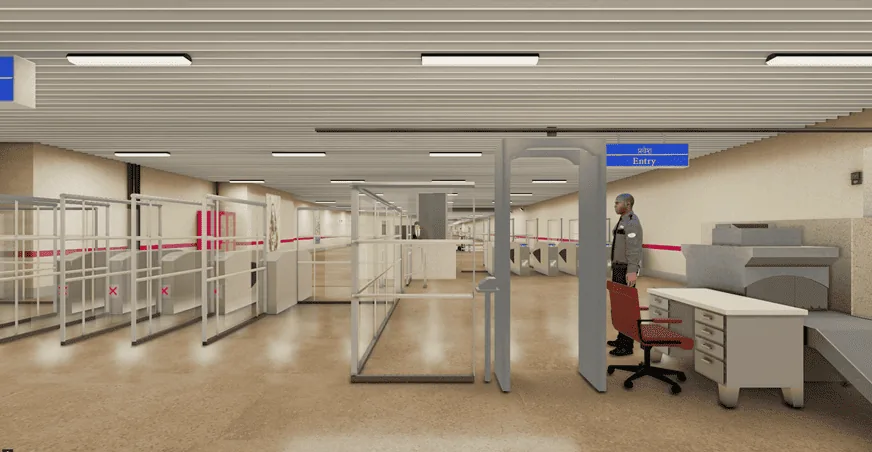
VR Simulation for Metro Construction & Station Operations
Throughput
↑85%
SOP Score
↓50%
Cost/Trainee
Read Case Study
Aviation MRO VR Maintenance Training
Aerospace & Aviation
EASA-Certified Aviation MRO Organisation
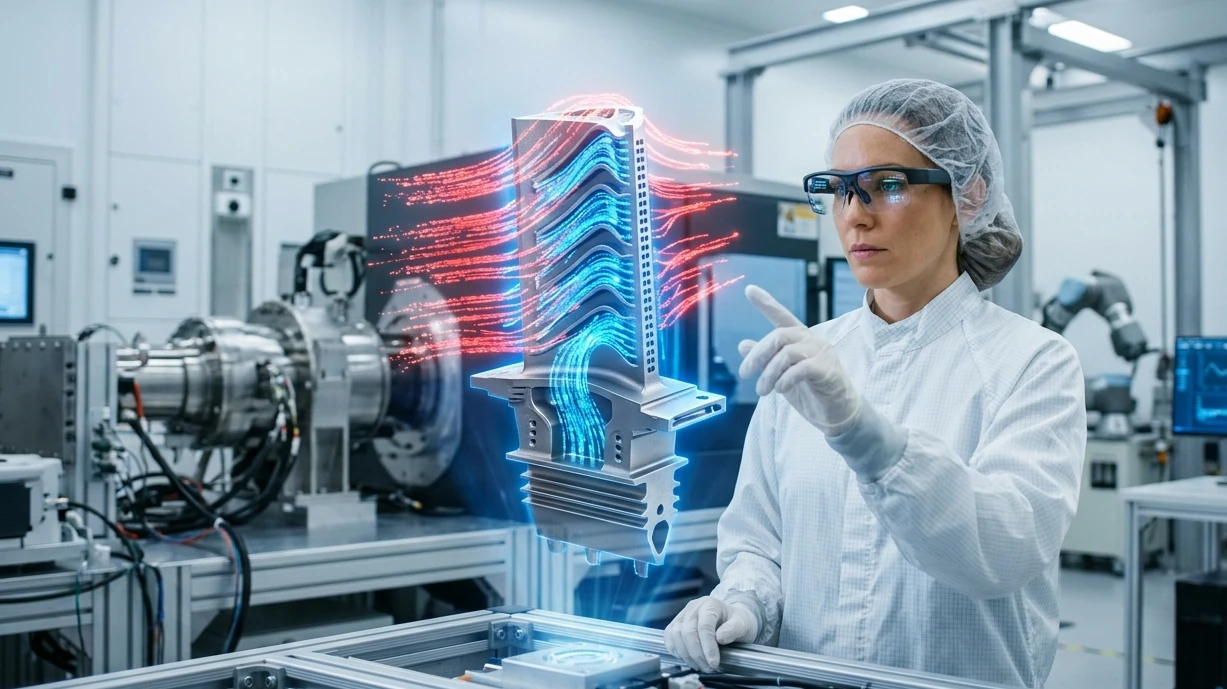
VR Aircraft Maintenance Training for Hangar Technicians
↓45%
Training Time
↑92%
Competency
Zero
Damage
Read Case Study
View All Case Studies
Ready to Build Your VR Training Programme?

Tell us your training challenge — we'll design a solution around your objectives, your workforce, and your budget.

Frequently Asked Questions

Common Questions

Questions commonly asked by training managers, safety officers, and procurement teams — answered directly.

A photorealistic simulation of your actual facility is built — your equipment, your hazard zones, your emergency scenarios. Workers put on a VR headset and train in this replica environment, experiencing realistic scenarios and responding to them as they would on real plant. Their decisions are tracked, errors are flagged with corrective feedback, and competency is assessed at the end of each session. On passing, a digital certificate is issued automatically.
The most widely deployed headsets for industrial VR training are Meta Quest 2, Meta Quest 3, and Pico 4 — all standalone headsets requiring no PC or trailing cables. For higher-fidelity simulation, PC-tethered headsets including HTC Vive Pro and Valve Index are used.
VR training is increasingly accepted by regulatory bodies as a supplement to — and in some jurisdictions an equivalent of — live drills, particularly for high-hazard scenarios that are impractical to stage safely. For most organisations: VR handles high-frequency, high-hazard training at scale, while live drills are reserved for full-facility exercises.
Realistic enough that workers recognise their environment and equipment immediately, and that the behaviour of simulated systems matches real-world physics closely enough to build correct muscle memory and decision habits. Site-specific environments built from your actual facility produce strong training transfer.
ROI comes from multiple sources: reduction in safety incident costs, elimination of production downtime for training, faster worker onboarding, and removal of damage caused by trainee errors. Typical outcomes include 60–70% reduction in recordable safety incidents and 55% reduction in cost-per-worker-trained. Most clients achieve payback within 12–18 months.
One trainer can monitor up to 12 simultaneous VR trainees using a remote instructor console. For larger facilities, multi-station training centres can run multiple groups in parallel. We have deployed systems certifying 5,000+ workers at a single industrial site.

Have a question not answered here?

Ask Us Directly